

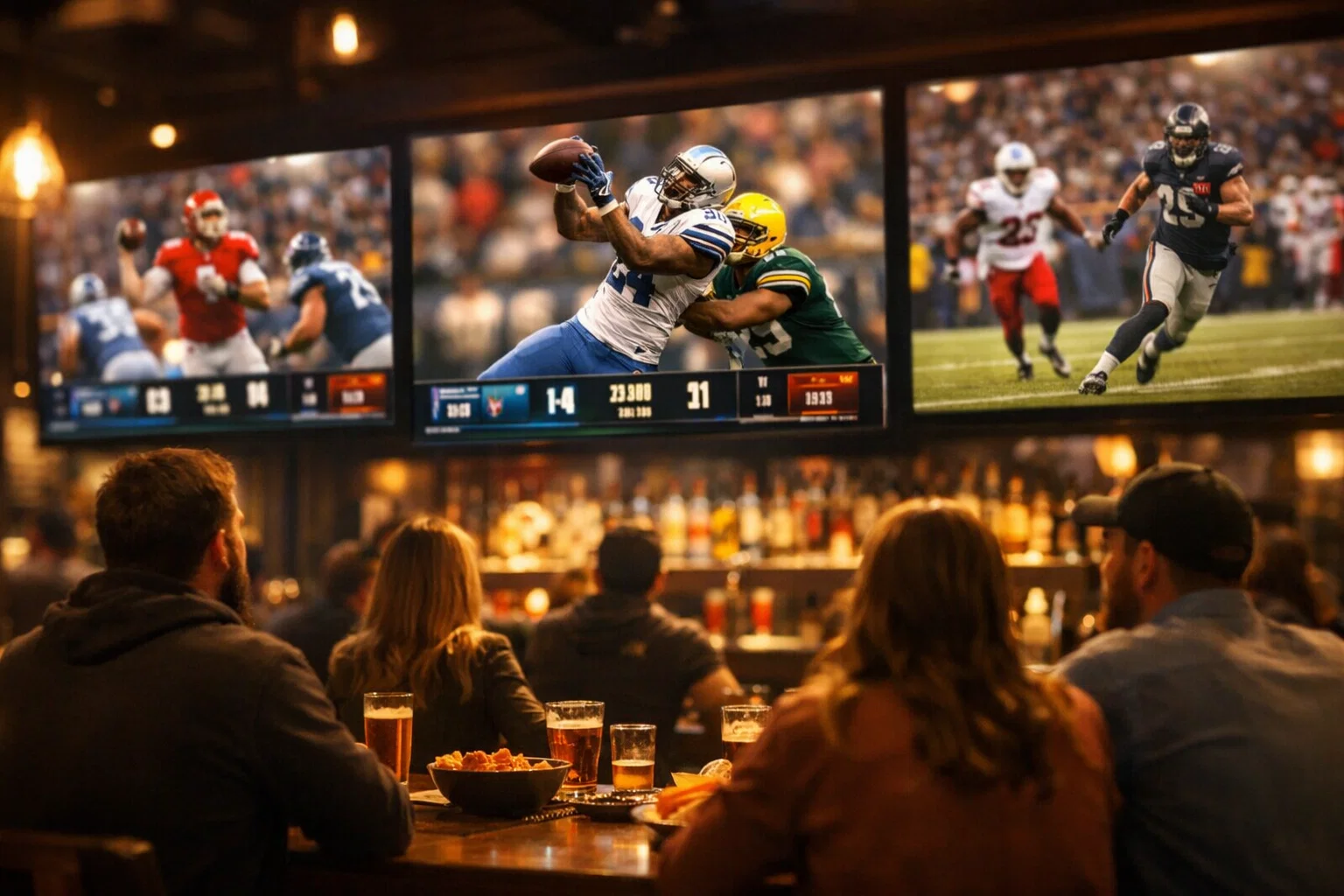
Parlays represent the lottery tickets of sports betting. Combine multiple selections into a single wager, and your potential payout multiplies with each added leg. Hit a four-leg parlay, and that modest $20 stake becomes $240. String together six winners, and you are looking at four figures from pocket change. The appeal is obvious, which is precisely why sportsbooks love parlays too—they know the math heavily favors the house.
This guide strips away the fantasy and examines parlay betting through a realistic lens. Yes, parlays can deliver substantial payouts. Yes, same-game parlays have revolutionized how people bet on individual matchups. But understanding how parlay odds work, recognizing when multi-bet tickets make strategic sense, and avoiding the common traps that destroy bankrolls requires more than wishful thinking. We will cover the mechanics, the mathematics, the strategies that professionals actually employ, and the mistakes that turn parlays from entertainment into financial drain.
Football parlays dominate the betting landscape for structural reasons. With 17 regular-season games per team in the NFL, each week offers a concentrated slate of matchups that beg to be combined. The Sunday afternoon experience practically invites parlay construction: you watch multiple games simultaneously, tracking your multi-leg ticket as each outcome unfolds. That engagement is part of the product sportsbooks sell. Understanding what you are buying—and what edge you are surrendering—helps you approach parlays intelligently.
While multi-leg tickets offer massive payouts, you should always understand football parlay betting math and strategy before risking your capital.
Understanding the Parlay Bet Structure
A parlay combines two or more individual bets into a single wager where all selections must win for the ticket to pay out. Miss one leg, and the entire parlay loses. This all-or-nothing structure creates the enhanced payouts that attract bettors while simultaneously creating the mathematical edge that attracts sportsbooks. The concept is simple, but the implications for your bankroll are profound.
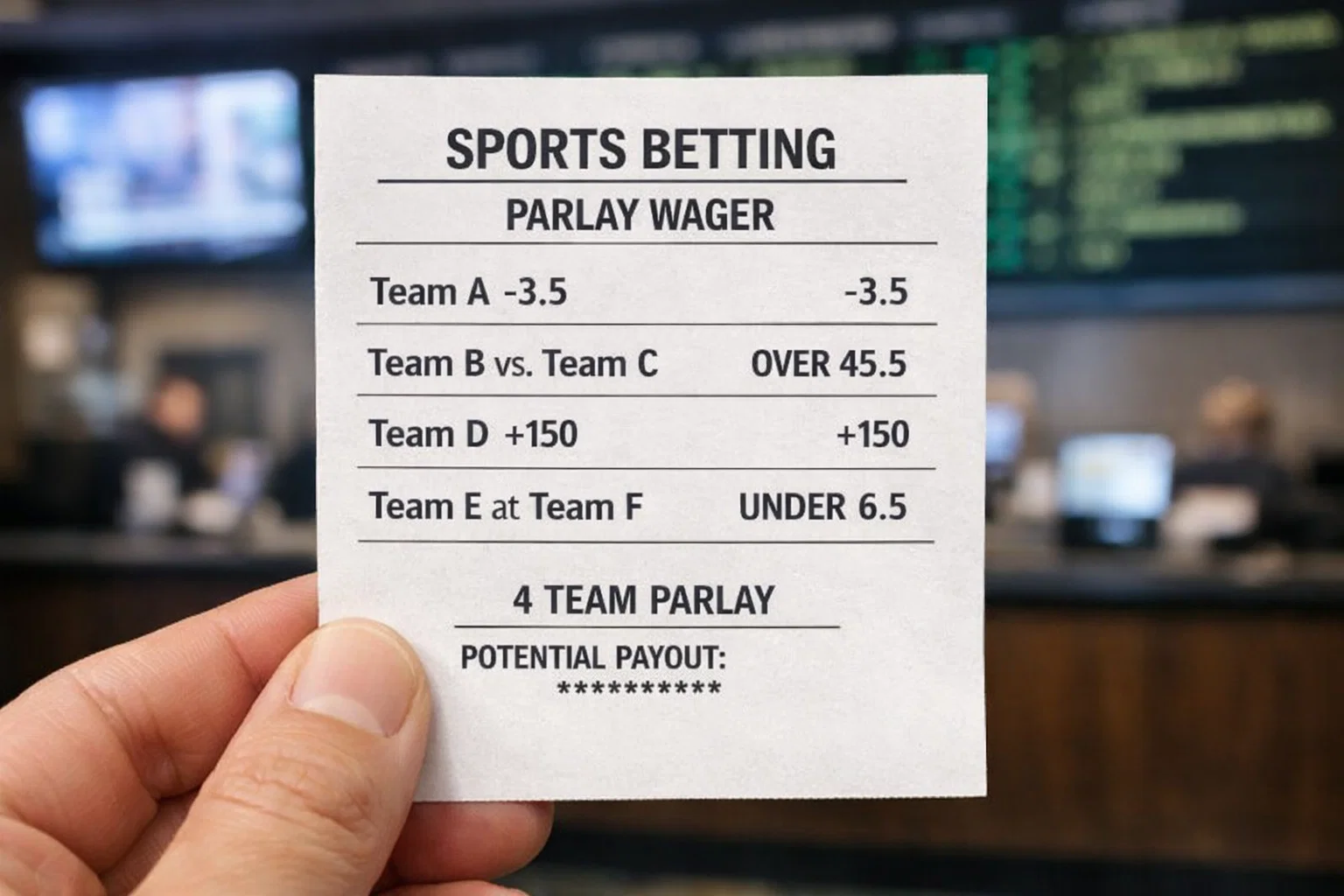
Consider a straightforward example. You like the Chiefs to cover -7, the Bills to win outright, and the over in the Cowboys game. Individually, each bet might pay roughly even money at -110. Combine them into a three-leg parlay, and your payout jumps to approximately 6-to-1. That $10 bet returns around $60 if all three hit. The multiplication of odds creates the excitement, but it also multiplies your probability of losing—because you now need three separate events to unfold favorably rather than just one.
The popularity of parlays reflects fundamental human psychology rather than sound betting strategy. Big potential payouts trigger the same reward centers that make lottery tickets appealing despite their negative expected value. Sportsbooks understand this and market parlays aggressively, featuring parlay builders prominently in their apps and advertising eye-catching potential payouts. The industry knows that parlays generate disproportionate profits because bettors consistently overestimate their ability to predict multiple outcomes correctly.
House edge considerations matter enormously with parlays. Each leg of your parlay carries its own vigorish—typically around 4.5% on standard -110 lines. When you combine multiple legs, those small edges compound. A two-leg parlay has roughly double the effective house edge of a single bet. A five-leg parlay? The sportsbook’s mathematical advantage becomes substantial. This compounding effect is why professional bettors generally avoid parlays except in specific circumstances that we will examine later.
How Parlay Odds Are Calculated
Understanding parlay math requires grasping how odds multiply across legs. When you combine bets, the sportsbook calculates the parlay price by multiplying the decimal odds of each selection. For American odds, you first convert to decimal, multiply, then convert back. The resulting parlay odds represent the theoretical payout based on compounded probabilities—minus the house edge built into each leg.
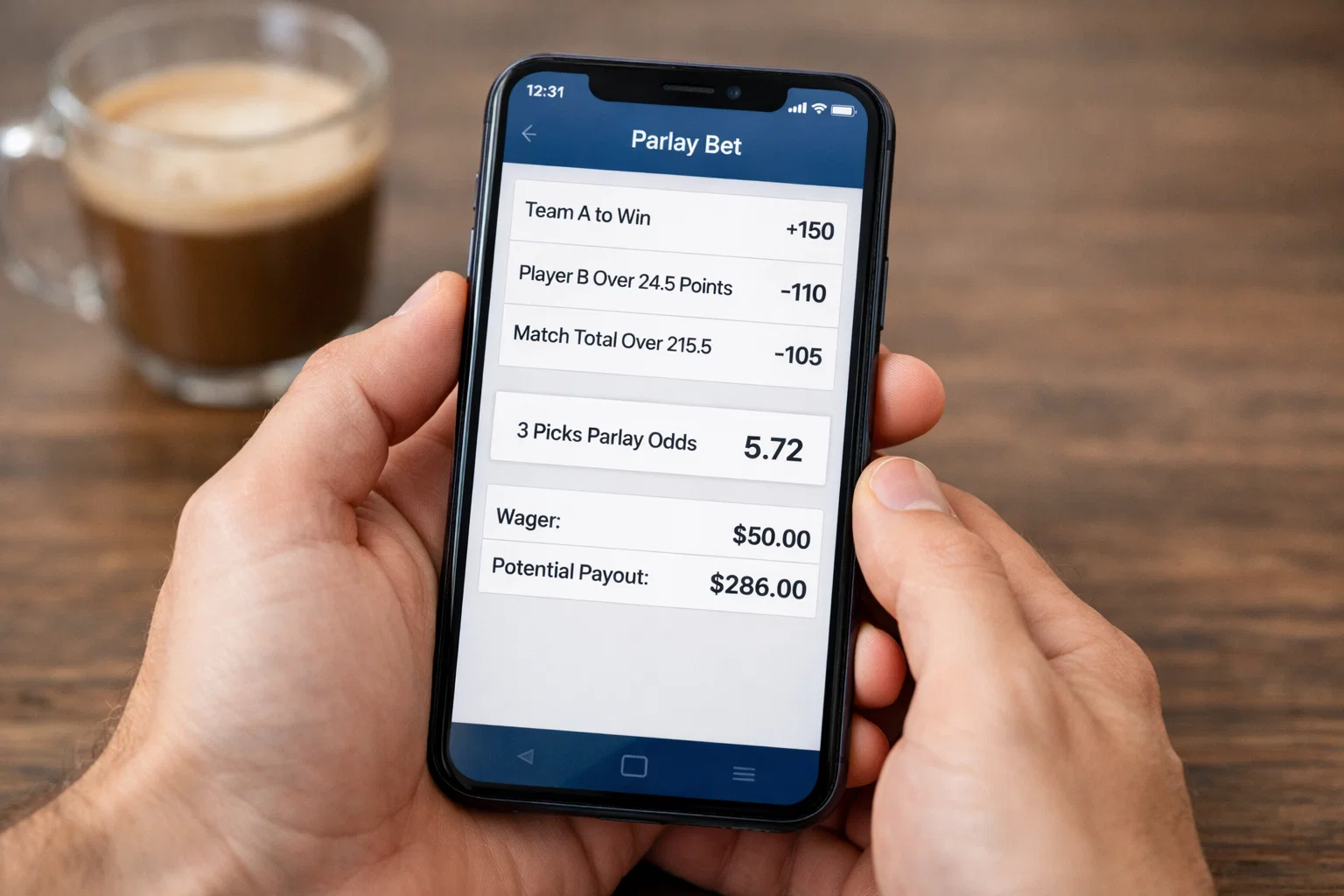
Here is the math in action. Take three legs at -110 American odds. Converting to decimal: -110 equals 1.909 (you get back $1.909 for every $1 wagered, including your stake). Multiply across three legs: 1.909 x 1.909 x 1.909 = 6.95. Your $10 parlay would return $69.50 total, or $59.50 in profit. This is slightly less than the 7-to-1 payout that “true odds” would provide, with the difference representing accumulated vigorish.
True odds versus house odds reveals the parlay tax you pay. If each -110 leg represents a genuine 50% proposition (which the -110 price implies), then three 50% outcomes combined should pay 8-to-1 (0.5 x 0.5 x 0.5 = 0.125, or 1-in-8). Instead, you receive roughly 6-to-1 on a standard three-leg parlay. That gap between 8-to-1 true odds and 6-to-1 actual payout represents the compounded house edge—roughly 13% on this example. The more legs you add, the wider this gap becomes.
Parlay payout tables provided by sportsbooks show approximate returns for various leg counts, but these are simplified guides rather than exact calculations. Actual payouts depend on the specific odds of each selection. A three-leg parlay with one heavy favorite (-300) and two underdogs (+150) will pay differently than three standard -110 legs. Sportsbook apps calculate exact payouts when you build your ticket, but understanding the underlying math helps you evaluate whether the offered price represents reasonable value.
Types of Football Parlays
Traditional parlays combine separate events—typically different games—into a single ticket. You might parlay the Chiefs spread with the Bills moneyline and the Packers-Bears over. Each leg is independent: the outcome of one game has no bearing on the others. These classic parlays remain popular because they let bettors express opinions across multiple matchups while pursuing enhanced payouts. The structure is straightforward, and every sportsbook offers them.
Same-game parlays have transformed football betting since their mainstream introduction around 2019. SGPs combine multiple selections from a single game: Patrick Mahomes over 275 passing yards plus the Chiefs to cover plus the game to go over the total. These bets were once unavailable because correlated outcomes complicated the math. Now, sophisticated pricing algorithms allow sportsbooks to offer SGPs with adjusted odds that account for statistical relationships between legs. The convenience and engagement of betting multiple angles on a single game has made SGPs enormously popular.
Teasers represent a specific parlay variant that adjusts point spreads in your favor across multiple legs. A standard six-point NFL teaser lets you move each spread by six points—turning Chiefs -7 into Chiefs -1, or Packers +3 into Packers +9. In exchange for this favorable adjustment, you must hit all legs (typically two or three) and accept reduced payouts, usually around -120 on a two-team teaser. Teasers can offer genuine value when used strategically around key numbers, but the reduced payout means you need higher win rates than traditional parlays.
Round robin bets create multiple smaller parlays from a larger selection of picks. If you like four teams, a round robin might create six two-team parlays from those four selections. You do not need all four to win—hitting any two-team combination produces some return. Round robins provide insurance against a single losing leg destroying your entire stake, but they require larger wagers to produce meaningful payouts. The structure appeals to bettors who want parlay-style action with less catastrophic downside.
Building Effective Football Parlays
Selecting correlated legs represents the sharpest parlay strategy available. Correlation means that outcomes are statistically linked—when one happens, the other becomes more likely. In a same-game parlay, the star running back going over his rushing yards correlates with his team winning and covering the spread (since teams that run successfully usually win). Combining these correlated outcomes means you are not actually multiplying independent probabilities; you are betting on a coherent game script that either materializes or does not.
The opposite approach—combining uncorrelated or negatively correlated bets—destroys value. Parlaying a team to win with their opponent’s quarterback to throw for 350 yards creates internal tension. If the team wins convincingly, the opposing quarterback likely throws fewer yards because his team trails and runs less efficiently. You have built a parlay that works against itself. Yet recreational bettors create such contradictory tickets constantly, seduced by the line items rather than thinking about the underlying game flow.
Mixing bet types within parlays requires careful consideration of how different markets relate. Combining a spread bet with a totals bet from the same game introduces correlation—high-scoring games tend to produce larger margins than low-scoring defensive battles. This correlation can work for or against you depending on construction. Combining spreads from separate games introduces no correlation but compounds independent probabilities. Understanding these relationships helps you build parlays with coherent underlying narratives rather than random collections of picks.
Optimal parlay size matters more than most bettors realize. Each additional leg increases potential payout but decreases probability of winning at an accelerating rate. A two-leg parlay has roughly a 25% chance of hitting if each leg is 50-50. A four-leg parlay drops to about 6%. A six-leg parlay sits around 1.5%. The massive payouts on large parlays reflect these tiny probabilities—and the compounded house edge makes them even worse than the raw math suggests. Most professional approaches cap parlays at two to four legs, where the math remains somewhat manageable.
Same-Game Parlay Strategies
Player prop combinations form the core of effective SGP construction. The key insight is identifying which player outcomes reinforce each other and which conflict. If you expect a shootout, consider combining quarterback passing yards with receiver targets and game total over. These outcomes point toward the same game environment—high volume passing correlating with elevated scoring. Conversely, combining a running back over on rushing with his team’s passing game props introduces tension, since teams that run successfully often pass less.
Game flow prediction underlies successful SGP building. Before selecting specific legs, envision how you expect the game to unfold. Will one team dominate early and cruise, or will it be competitive throughout? Will weather or injury affect playing style? A game in heavy wind suggests rushing-heavy scripts, lower passing totals, and possibly lower overall scoring. Build your SGP legs to reflect this coherent vision rather than selecting individual props in isolation. The correlation between legs should emerge naturally from your game prediction.
Correlated outcome identification requires understanding football statistics. A quarterback exceeding his passing yards mark correlates positively with pass catchers exceeding theirs, with the team covering if favored, and often with the game going over the total. A defense registering multiple sacks correlates with lower quarterback passing yards, potentially lower scoring, and improved odds of that team covering. These statistical relationships are not perfect, but they are consistent enough to inform intelligent SGP construction.
Sportsbooks price SGP correlation into their odds, reducing payouts when legs reinforce each other and increasing them when legs conflict. A parlay of Chiefs -7 and Chiefs over their team total might pay +250, while Chiefs -7 and Chiefs under their team total might pay +400. The lower payout on the correlated combination reflects the sportsbook’s recognition that these outcomes frequently coincide. Despite this adjustment, identifying high-correlation combinations still often provides better risk-adjusted returns than random leg selection.
Parlay Betting Mistakes to Avoid
The most common parlay mistake involves adding too many legs in pursuit of massive payouts. The fantasy of turning $10 into $5,000 on a ten-leg parlay obscures the reality that such tickets almost never win. Even if you are an excellent handicapper who wins 55% of your straight bets—a genuinely strong record—your probability of hitting ten consecutive winners is under 0.3%. Factor in the compounded house edge, and these large parlays represent pure entertainment rather than serious betting strategy. Professionals almost universally avoid parlays exceeding four legs.
Ignoring juice accumulation devastates parlay bankrolls over time. That 4.5% house edge on each -110 leg compounds across multiple selections. On a two-leg parlay, you face roughly 9% effective edge. On a four-leg parlay, the edge approaches 18%. On longer parlays, you might surrender 25-30% in expected value. Many bettors never do this math, focusing instead on potential payouts without recognizing the mathematical headwind they face. Understanding juice accumulation does not mean never betting parlays; it means recognizing the entertainment premium you pay for enhanced action.
Chasing big payouts with unlikely combinations represents gambling behavior rather than strategic betting. The impulse to seek life-changing money from small stakes is psychologically powerful but mathematically destructive. Parlays should be sized as entertainment expenses rather than investment vehicles. Allocating 5-10% of your betting bankroll to parlay action—while accepting that most will lose—represents a sustainable approach. Betting significant portions of your bankroll on low-probability parlays guarantees eventual ruin regardless of your handicapping skill.
Failing to shop parlay prices costs bettors real money. Different sportsbooks offer different parlay payouts for identical selections. One book might pay +600 on a three-leg parlay while another pays +650. Over time, these differences compound significantly. Building your parlay at the book offering the best price should be automatic, yet many bettors stick with a single sportsbook out of convenience. Having accounts at multiple reputable sportsbooks and comparing prices before placing parlay bets captures value that casual bettors surrender.
When Parlays Make Sense
Despite their mathematical disadvantage, parlays make strategic sense in specific circumstances. Small bankrolls represent one legitimate use case. If you have $100 to bet for entertainment over an NFL season, placing $6 single bets offers minimal excitement and limited profit potential. Using a portion of that bankroll for small parlays creates the possibility of meaningful wins that could sustain your action throughout the season. The higher variance aligns with a limited bankroll that cannot withstand the grinding nature of single-bet strategies.
Correlated parlays represent the strongest strategic application. When two outcomes are genuinely correlated—not just seemingly related, but statistically linked—parlaying them can actually reduce the effective house edge compared to betting them separately. The six-point NFL teaser through key numbers 3 and 7 (like moving +1.5 to +7.5 and -7.5 to -1.5) has historically shown positive expected value because the point adjustment crosses numbers with high frequency rates. Sharp bettors use these specific structures while avoiding random parlay construction.
Entertainment value justifies parlay betting for many people, and that is a legitimate reason if properly framed. Watching an afternoon of football with a multi-game parlay provides engagement across the entire slate rather than focused attention on a single matchup. If you recognize the mathematical cost and size your bets appropriately—treating parlay losses as entertainment expenses rather than investment setbacks—there is nothing wrong with participating in this market. The problem arises when entertainment bets morph into attempts at serious profit generation.
Promotional offers occasionally create positive expected value parlay situations. Sportsbooks frequently offer parlay insurance (stake returned if one leg loses), profit boosts on parlays, or enhanced parlay payouts. These promotions can flip the math in the bettor’s favor. A 25% profit boost on a three-leg parlay might push a negative expected value bet into positive territory. Tracking and exploiting such promotions represents a rational approach to parlay betting, though it requires discipline to bet only when favorable terms exist.
Advanced Parlay Strategies
Hedging parlays allows you to guarantee profit when most legs have already won. Suppose you placed a four-leg parlay at +1200, and three legs have already hit. The final leg has the Eagles -3 against the Cowboys. You can bet the Cowboys +3 at a different sportsbook, guaranteeing some profit regardless of outcome. The math depends on your parlay stake, the payout, and the price available on the hedge—but the principle of locking in returns when deep into a parlay is sound strategy that professionals employ routinely.
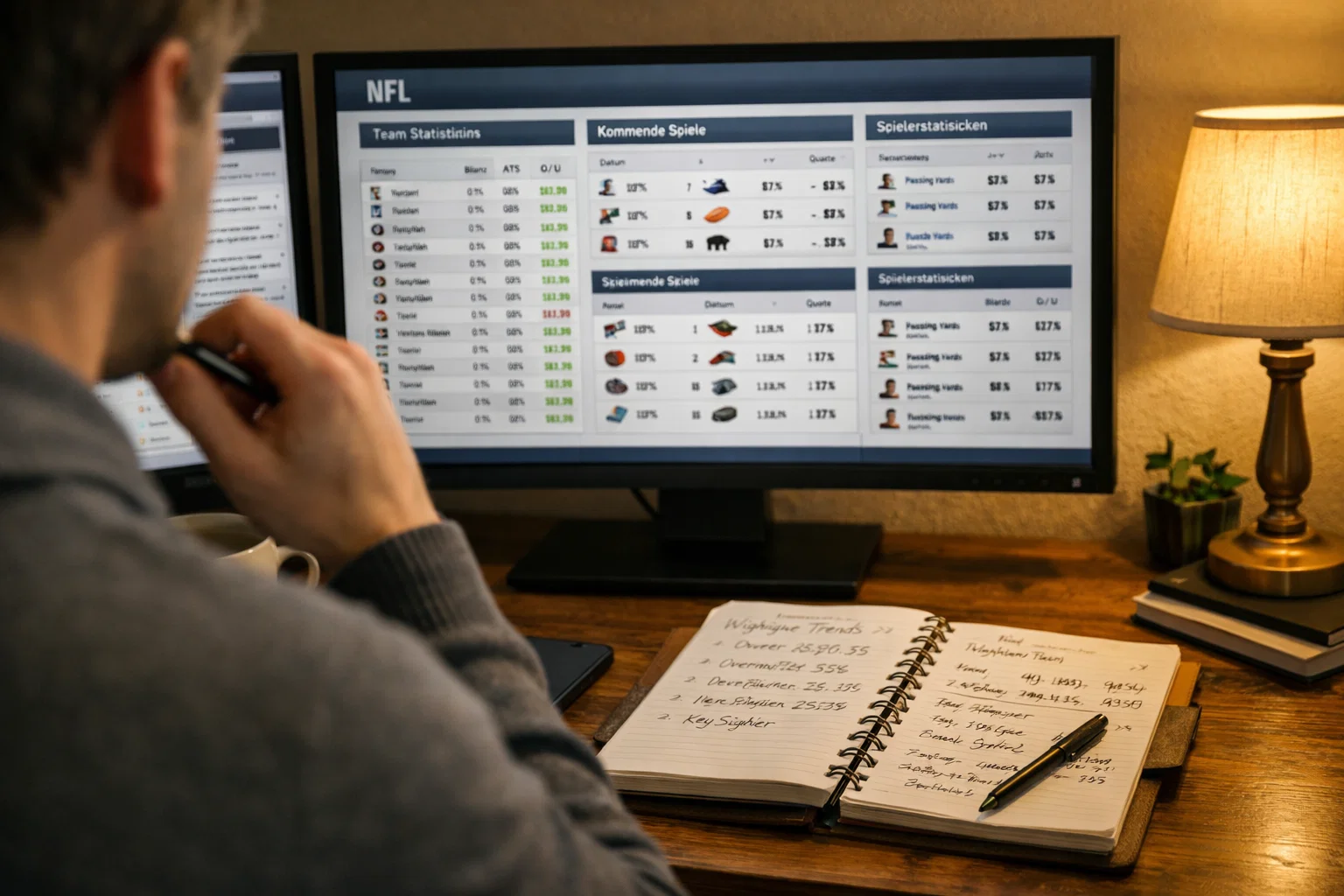
Middle opportunities arise when line movements create scenarios where you can win both sides of a hedge. Using the previous example: you parlay at Eagles -3, and by game time the line has moved to Eagles -6. Your hedge on Cowboys +6 creates a three-point middle. If the Eagles win by exactly 4 or 5, both your parlay and your hedge win. Middles do not occur frequently, but recognizing when line movement creates these opportunities adds value to an advanced parlay strategy.
Cash-out decisions require disciplined analysis rather than emotional reactions. Most sportsbooks now offer early cash-out on parlays, allowing you to close your position before all legs complete. The offered cash-out amount reflects current odds adjusted by a significant house margin—typically around 20-25% below fair value. Accepting cash-out usually means surrendering value, but it can make sense when the remaining risk no longer aligns with your strategy or when non-betting factors (like needing the money) override optimal mathematics.
Constructing anti-correlated parlays intentionally represents a contrarian advanced approach. If sportsbooks underprice negative correlation, parlaying opposing outcomes might offer value despite the inherent tension. For instance, parlaying a game under with both teams to cover their respective totals creates seemingly contradictory positions, but if the pricing on such combinations is loose enough, value can exist. This approach requires sophisticated understanding of how sportsbooks price correlation and is not recommended for most bettors.
Managing Parlay Bankroll Allocation
Parlays demand stricter bankroll discipline than straight bets because their variance is exponentially higher. Where a single-bet bankroll might withstand 20 consecutive losses (if sized at 5% per bet, you would still have about 35% of your original bankroll), a parlay-heavy approach can evaporate that same bankroll in a fraction of the attempts. Setting a hard cap on parlay allocation—perhaps 10-20% of your total betting bankroll—protects against the devastating losing streaks that multi-bet wagering produces.
Unit sizing for parlays should reflect their recreational nature. If your standard straight bet is one unit, your parlay bets might be 0.25 to 0.5 units. This sizing acknowledges that you expect to lose most parlays while occasionally capturing meaningful returns. The psychological impact of parlay losses is also worth considering—losing a two-unit parlay feels worse than losing two one-unit straight bets, even though the mathematical loss is identical. Smaller parlay sizing reduces both financial and emotional volatility.
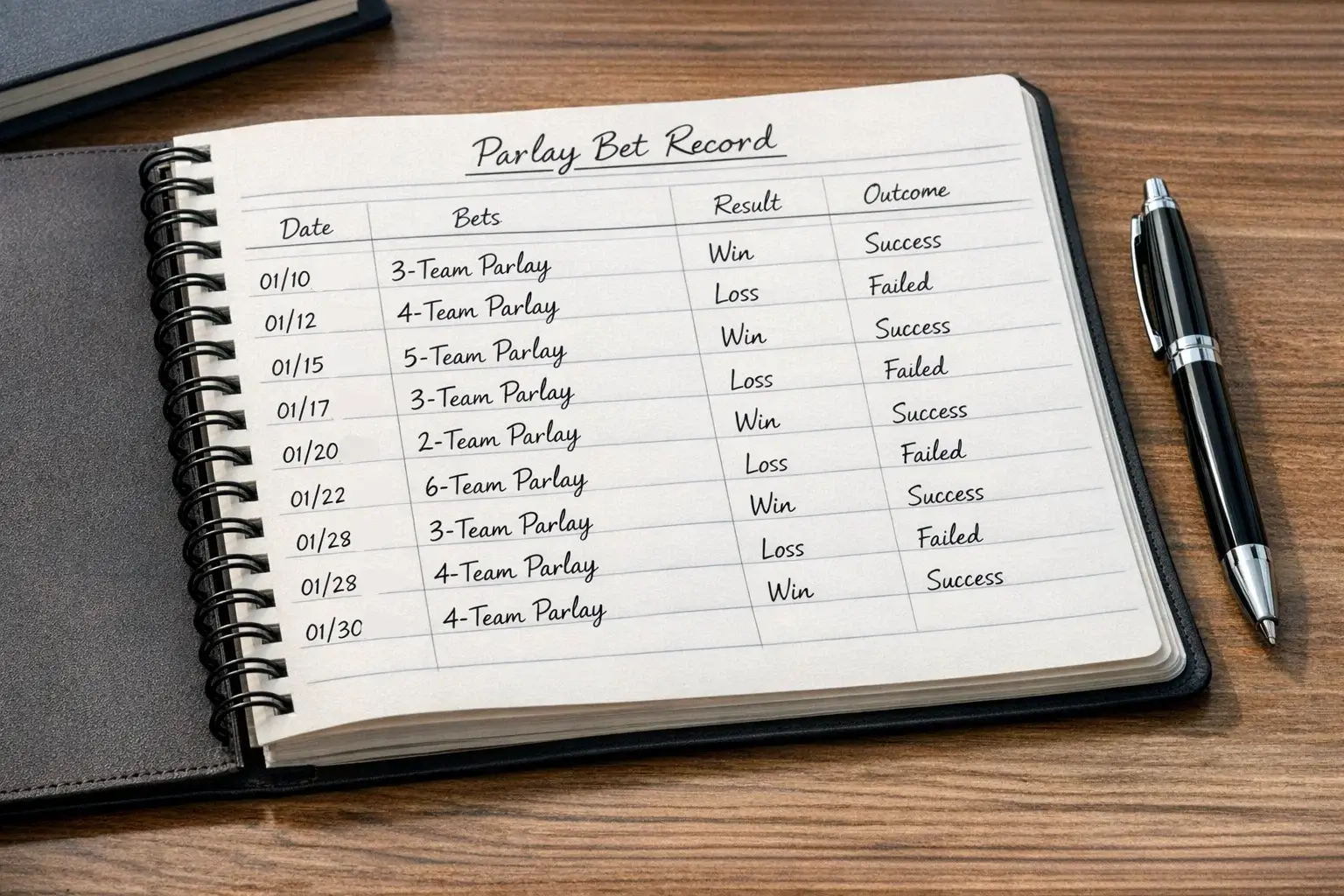
Tracking parlay performance separately from straight bets provides essential feedback. Many bettors who believe they are profitable discover, upon honest analysis, that parlay losses have erased their straight-bet gains. Maintaining separate records allows you to evaluate whether your parlay strategy actually works or whether it merely feels exciting while draining your bankroll. If your parlay record shows consistent losses over 100+ tickets, reconsidering your approach or eliminating parlays entirely becomes the rational response.
Setting stop-loss limits for parlay sessions prevents destructive escalation. It is easy, after losing two or three parlays early in a day, to increase stake size chasing recovery. This behavior accelerates bankroll destruction. A predetermined limit—perhaps losing no more than three parlay units in a single day—imposes discipline that feels constraining in the moment but protects long-term viability. Parlays already carry enough house edge; compounding it with tilt-induced poor sizing eliminates any chance of positive outcomes.
The Psychology of Parlay Betting
Understanding why parlays appeal so strongly helps manage their risks. The near-miss phenomenon is particularly powerful: hitting four of five legs on a parlay creates the feeling of being “so close” to a big win, encouraging continued play. In reality, four of five produces identical outcomes to zero of five—a complete loss. Your proximity to winning means nothing to your bankroll. Recognizing this cognitive distortion helps resist the urge to chase near-misses with additional parlays.
Social proof drives parlay popularity in counterproductive ways. Social media showcases winning parlay tickets—the screenshot of the $10-to-$3,000 hit goes viral while thousands of losing tickets go unmentioned. This survivorship bias creates a distorted impression of parlay profitability. The winners share; the losers stay silent. Recognizing that visible parlay wins represent a tiny fraction of total parlay outcomes helps calibrate realistic expectations.
The illusion of control affects parlay construction. Bettors believe that their knowledge and research translate into increased probability of hitting multi-leg tickets. While skill does improve individual leg selection, the compounding effect of multiple legs quickly overwhelms any edge. Even sharp bettors who maintain 55% win rates on straight bets see their probability of hitting a five-leg parlay drop to roughly 5%. The feeling of expertise does not change the mathematics of multiplied probabilities.
Immediate feedback loops make parlays particularly engaging and potentially addictive. Unlike futures bets that resolve over months, parlays typically complete within a single day’s action. This rapid cycle—bet, outcome, bet again—creates the feedback pattern that reinforces gambling behavior. The intensity of watching multiple legs unfold simultaneously produces neurochemical rewards that can drive excessive betting. Recognizing these psychological mechanisms helps maintain healthy boundaries around parlay activity.
Conclusion
Parlay betting occupies a unique space in the sports wagering ecosystem—wildly popular among recreational bettors, largely avoided by professionals, and enormously profitable for sportsbooks. This guide has examined why that dynamic exists and how to navigate it intelligently. The math consistently favors the house, but understanding when and how to use parlays can make them a sustainable part of your betting activity rather than a bankroll-destroying trap.
The most important takeaway is proportionality. Treat parlays as entertainment with an associated cost rather than as a wealth-building strategy. Size your parlay bets modestly, cap your total parlay exposure, and accept that most tickets will lose. When you do hit, appreciate the outcome for what it is—a fortunate result rather than confirmation of a winning system. This mindset allows you to enjoy parlay action without suffering the financial and emotional consequences of overexposure.
If you choose to pursue parlays seriously, focus on correlated SGPs with coherent game narratives, limit leg counts to four or fewer, shop prices across multiple sportsbooks, and track your results honestly. The strategies that occasionally create positive expected value—targeted teasers through key numbers, promotional exploitation, correlated outcome identification—require significant effort and knowledge to execute properly. For most bettors, acknowledging parlays as entertainment and sizing them accordingly represents the optimal approach.
Access comprehensive sportsbook reviews and exclusive bonuses at our trusted football betting portal.
