

The uncomfortable truth about football betting is that most participants lose money over time. Sportsbooks employ teams of analysts, leverage sophisticated algorithms, and build mathematical edges into every line they post. Beating them consistently requires more than football knowledge—it demands a structured approach that combines disciplined bankroll management, value identification, and emotional control. The strategies outlined here will not guarantee profits, but they represent the methods that successful bettors actually use.
This guide focuses on actionable frameworks rather than vague advice. You will learn how to size your bets appropriately, identify situations where the odds offer genuine value, time your wagers to capture favorable lines, and analyze games using data that recreational bettors ignore. We will cover both NFL and soccer betting approaches, since football means different things depending on where you are reading this. The principles translate across both sports, even when the specific metrics differ.
What separates winning bettors from losing ones is rarely superior football knowledge. Plenty of losing bettors can tell you everything about offensive line play or midfield pressing patterns. The difference lies in process: how bets are sized, how value is calculated, how emotions are managed during inevitable losing streaks. Strategy without discipline produces the same results as no strategy at all. Keep that in mind as you work through these approaches—implementation matters more than understanding.
Even the sharpest predictions will fail without strict bankroll management for football betting to protect your funds during losing streaks.
Foundational Betting Bankroll Management
Every serious betting strategy begins with bankroll management because nothing else matters without it. Your bankroll is the total amount of money you have dedicated to betting—funds you can afford to lose entirely without affecting your life. This distinction is crucial. Betting with rent money or emergency savings creates psychological pressure that distorts decision-making and virtually guarantees poor outcomes. Proper bankroll management assumes you are working with discretionary entertainment funds.
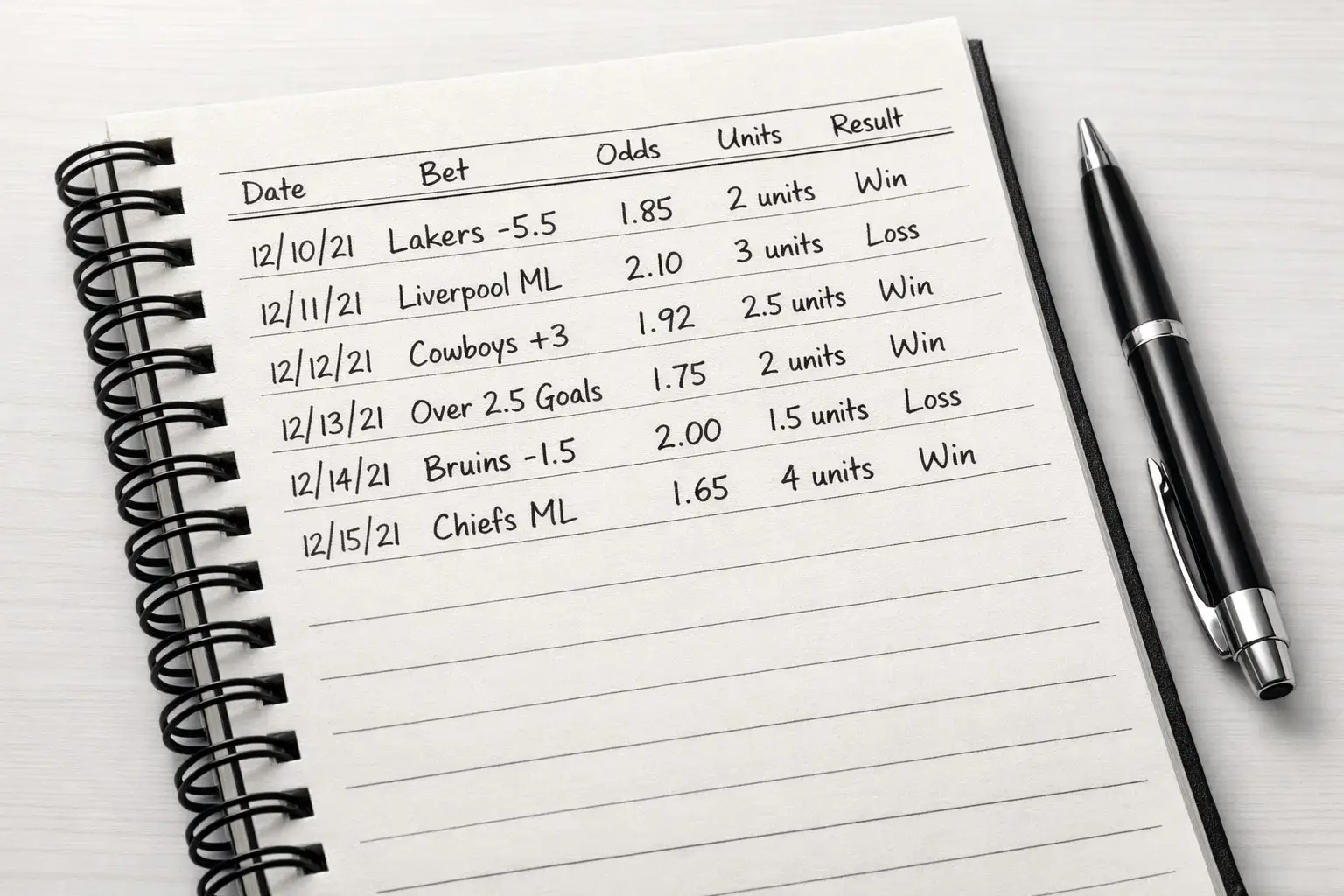
The unit betting system provides the framework that professionals use universally. One unit represents a standardized bet size, typically 1-3% of your total bankroll. If your bankroll is $2,000, one unit might be $20-$60 depending on your risk tolerance. Conservative bettors stick to 1% per unit; more aggressive approaches use 2-3%. The key is consistency—every standard bet should be one unit, with occasional increases to 1.5 or 2 units for particularly strong plays. This systematic approach prevents the common mistake of bet size fluctuating based on confidence or emotion.
Why does the 1-3% rule matter mathematically? Consider variance. Even excellent bettors who win 55% of their spread bets will experience losing streaks of ten or more games. If you are betting 10% of your bankroll per game, a ten-loss streak eliminates 65% of your funds. At 2% per bet, that same streak costs roughly 18%. The smaller unit size allows you to survive the inevitable downturns that affect every bettor, keeping you in action long enough for your edge to manifest over thousands of bets.
Tracking your bets transforms vague impressions into concrete data. Maintain records of every wager including date, sport, bet type, odds, stake, and result. Over time, this database reveals patterns invisible to memory alone. Perhaps you are profitable on underdogs but lose consistently on favorites. Maybe your NFL bets win while your college picks fail. Without tracking, you cannot identify what works and what does not. Spreadsheets work fine; dedicated apps like Action Network or BetStamp offer additional features. The format matters less than the discipline of recording everything.
Value Betting Strategy
Value betting represents the core concept that separates professional approaches from recreational gambling. A value bet exists when the odds offered by a sportsbook imply a lower probability than you believe the actual probability to be. If you think a team has a 55% chance to cover the spread, but the -110 odds imply only a 52.4% probability, you have identified value. Betting consistently on positive expected value situations—regardless of whether individual bets win or lose—produces profit over sufficient sample sizes.

Calculating implied probability converts odds into percentages you can compare against your own assessments. For American odds, the formulas are straightforward. For favorites (negative odds): implied probability equals the absolute value of the odds divided by that value plus 100. So -150 implies 150/(150+100) = 60%. For underdogs (positive odds): implied probability equals 100 divided by the odds plus 100. So +200 implies 100/(200+100) = 33.3%. These calculations reveal what the sportsbook believes and allow you to identify disagreements worth exploiting.
The challenge, of course, is accurately estimating true probabilities yourself. This is where football knowledge becomes relevant—but it must be football knowledge that the market has not already incorporated. If you think the Chiefs are better than their -7 spread suggests simply because they are talented, you are probably wrong; the market knows they are talented. Value emerges in situations the market misprices: overlooked injuries, weather impacts, motivational factors, or statistical patterns that casual bettors miss. Developing this edge requires effort, but it is the only sustainable path to profitability.
Comparing odds across multiple sportsbooks is essential for value betting because different books offer different prices. One sportsbook might have the Bills at -6.5 (-110) while another has them at -6 (-115). These differences matter enormously over time. A bettor who consistently gets an extra half-point or better odds on the same picks will outperform someone who bets blindly at a single book. This practice, called line shopping, costs nothing except the time to maintain accounts at multiple sportsbooks.
The Line Shopping Strategy
Line shopping is the closest thing to free money in sports betting. Different sportsbooks set slightly different lines based on their risk exposure, customer base, and algorithmic variations. These differences—sometimes half a point, sometimes more—compound into significant edge over hundreds of bets. A bettor who consistently captures better numbers essentially starts each bet with a small advantage before the game even kicks off.

Why do odds vary between sportsbooks? Several factors contribute. Books that cater to recreational bettors often shade lines toward popular teams, knowing their customers want to bet the Cowboys or Patriots regardless of value. Sharp-oriented books may have already moved their lines based on professional action, while softer books lag behind. Regional preferences also play a role—a Nevada sportsbook might offer different numbers on Raiders games than an East Coast book. These inefficiencies create opportunities for alert bettors.
Timing your bets optimally requires understanding market dynamics. Opening lines, posted early in the week, often contain the most value because the market has not yet processed all information and betting action. By kickoff, lines have been sharpened by millions of dollars in wagers. However, waiting can also make sense when you expect news (like injury reports) to move the line favorably. The general guidance: if you like a number, bet it before it moves against you. Hesitation in pursuit of a better line often costs more than it gains.
Maintaining accounts at five to ten reputable sportsbooks provides sufficient coverage for most line shopping needs. The marginal benefit of adding a twentieth book is minimal, but the jump from one book to five is substantial. Quick odds comparison before placing any bet should become automatic—taking thirty seconds to check three or four books can mean the difference between laying -6.5 and laying -7, a gap that determines outcomes in roughly 3% of NFL games.
Research-Based Betting Approach
Research separates informed betting from gambling. The challenge is knowing which information matters and which is noise. Football generates endless statistics, narratives, and expert opinions, most of which the market has already incorporated into its prices. Your research must focus on factors that either move more slowly than public perception or are systematically underweighted by casual bettors.
Key statistics worth tracking depend on the specific bet type. For spread betting, focus on metrics that correlate with margin of victory: point differential, yards per play differential, turnover margin, and red zone efficiency. For totals, examine pace of play, average points scored and allowed, and historical over/under trends in specific situations. Avoid statistics that sound impressive but lack predictive value—total yards, for instance, correlates poorly with winning because it ignores efficiency and context.
Injury impact assessment requires nuance beyond simply noting who is out. A backup quarterback starting matters more than a third-string linebacker missing the game. Consider the quality of the replacement, the opponent’s ability to exploit the weakness, and how the team’s scheme might adapt. Importantly, evaluate whether the line has already moved to account for the injury. If a starting quarterback is ruled out Wednesday and the line moved three points by Thursday, the market has already priced in that information. Value exists only when your assessment differs from the market’s adjustment.
Weather factors affect football outcomes in predictable ways that bettors often underweight. Wind reduces passing efficiency and kicking accuracy, generally favoring unders and run-heavy teams. Rain creates fumble opportunities and slows down high-tempo offenses. Cold weather advantages teams accustomed to playing in it—a dome team traveling to Green Bay in December faces real performance headwinds. Check weather forecasts before betting any outdoor game, especially for totals where weather impact is most pronounced.
Motivational situations represent the squishiest analytical category but remain genuinely relevant. Teams coming off embarrassing losses often respond with focused performances. Teams that have clinched playoff positions may rest starters or lack intensity. Revenge games, where a team faces an opponent that defeated them earlier, produce measurably different outcomes than neutral matchups. These factors are difficult to quantify but foolish to ignore entirely.
Fade the Public Strategy
Contrarian betting—fading the public—works because recreational bettors exhibit predictable biases that sportsbooks exploit. The public overvalues favorites, popular teams, recent performance, and primetime games. When heavy public action pushes a line in one direction, value sometimes emerges on the other side. This does not mean blindly betting against the public consensus; it means recognizing when that consensus has moved the line beyond fair value.
Understanding public bias starts with recognizing what drives casual betting decisions. Recreational bettors want to root for their bets, which means betting on good teams and over totals (more points equals more excitement). They overreact to recent results—a team that won impressively last week gets excessive action this week regardless of matchup context. They bet more on nationally televised games, inflating lines on Sunday and Monday night matchups. These patterns create systematic inefficiencies that contrarian bettors can exploit.
When does going contrarian actually offer value? The research suggests that betting against the public becomes profitable when public betting percentages exceed 70-75% on one side. Below that threshold, the effect is too weak to overcome the vigorish. Track public betting percentages through sites like Action Network or VegasInsider to identify lopsided games. When you find a game where 80% of bets are on one side but the line has moved the other direction—so-called reverse line movement—sharp money is likely driving that move against public sentiment.
Finding value on underdogs follows naturally from fading public bias. The public loves favorites, particularly large favorites, which creates persistent value on underdogs against the spread. Historical data shows that NFL underdogs have covered at rates slightly above 50% over large sample sizes—not a huge edge, but meaningful given the vigorish headwind. Home underdogs perform even better, combining the contrarian angle with home field advantage. This does not mean betting every underdog blindly, but it does mean giving underdogs more consideration than your instincts might suggest.
Key Number Strategy for NFL Betting
The NFL’s scoring structure creates concentration around specific margins of victory, most notably three points (field goal) and seven points (touchdown plus extra point). Approximately 15% of NFL games end with a three-point margin, and another 9% end with a seven-point margin. No other margins come close to this frequency. Understanding these key numbers fundamentally changes how you approach spread betting.
Betting around 3 and 7 requires recognizing when half-points dramatically affect expected outcomes. The difference between +2.5 and +3 is massive—at +3, you push instead of lose when the favorite wins by exactly three. Given that three-point margins occur in 15% of games, that half-point swing affects roughly one in seven outcomes. Similarly, moving from +7 to +7.5 protects you against seven-point losses, affecting about one in eleven games. These margins justify paying extra juice to cross key numbers.
Buying points makes strategic sense specifically around 3 and 7, but rarely elsewhere. Most sportsbooks charge 10 cents of additional vigorish per half-point purchased—laying -120 instead of -110 to move from -3 to -2.5, for example. This price is worth paying on key numbers because the frequency of relevant outcomes justifies the cost. Buying from -5 to -4.5 offers far less value because five-point margins occur infrequently. The rule of thumb: pay to cross 3 and 7, be skeptical of paying to move other numbers.
Teaser strategies exploit key numbers most effectively. A standard six-point NFL teaser lets you move two spreads by six points each at reduced payouts (around -120 for a two-team teaser). The optimal use involves crossing both 3 and 7 in the same direction—taking a +1.5 to +7.5 or taking a -7.5 to -1.5. These “Wong teasers” (named for betting author Stanford Wong) have historically shown positive expected value because they capture multiple key numbers in a single bet. Other teaser constructions typically do not offer the same mathematical edge.
In-Play and Live Betting Strategy
Live betting offers both opportunity and danger in concentrated form. Lines update constantly during games, creating potential mispricings when algorithms lag behind actual game developments. However, the speed required to exploit live inefficiencies favors sportsbooks over most bettors. Success in live betting requires either specialized knowledge that allows quick assessments or disciplined targeting of specific situations where you have an edge.
Reading game momentum is essential for live betting but easily misinterpreted. Not all momentum is real—a team that just scored might face an energized opponent rather than a demoralized one. The profitable live betting approach focuses on situations where the market overreacts to events. A team falling behind early might see their live spread move dramatically despite the game still being highly competitive. If your pre-game assessment valued the team at +3, and they now have a live spread of +10 after falling behind 7-0 in the first quarter, that three-touchdown swing may exceed the actual impact of the early deficit.
Timing live bets requires patience and predetermined criteria. Do not bet reactively because something exciting happened. Instead, identify before the game specific scenarios that would create value. Perhaps you believe a team is undervalued and want to bet them if they fall behind early. Perhaps you think the total is too high and want to grab a better live over number if the first quarter stays low-scoring. These predetermined targets prevent emotional betting and focus your live action on situations you have actually analyzed.
Market inefficiencies in live betting emerge from algorithmic limitations. Sportsbook live lines are generated by models that cannot capture all game context. Weather changes (wind picking up, rain starting), injury information that has not been announced yet, or tactical adjustments that fundamentally alter game dynamics all create gaps between the live line and fair value. Exploiting these gaps requires watching games closely and understanding football at a level that lets you assess situations faster than the algorithm adjusts.
Season-Long Strategies
The NFL season unfolds in phases that reward different strategic approaches. Early season games (weeks one through four) feature rosters that have changed significantly from the prior year, statistical baselines that have not yet stabilized, and betting markets that still rely heavily on preseason expectations. Sharp bettors often find the most value early in the season when public perception lags roster reality.
Week one presents unique opportunities because no current-season data exists. Lines are set based on projections and prior year performance, which may not reflect offseason changes. A team that lost key players to free agency might be overvalued based on last year’s record. A team with a new coaching staff implementing a different scheme is difficult for markets to price accurately. These uncertainties create value for bettors who have done deep offseason homework on roster changes and schematic shifts.
Mid-season adjustments become critical as sample sizes grow. By week eight, current-season data is more predictive than prior-year data for most teams. Adjust your handicapping to weight recent performance appropriately without overreacting to single games. Teams that started slowly due to new systems often improve as chemistry develops—buying low on slow starters can produce mid-season value. Conversely, teams with unsustainable early success (perhaps driven by turnover luck or close-game variance) may offer value on the fade.
Playoff betting differs from regular season betting in important ways. The quality of teams is higher and more uniform, reducing the number of mismatches. Teams have extensive film on opponents, reducing scheme advantages. Home field matters more when travel is eliminated by bye weeks, and weather becomes a larger factor in outdoor stadiums. The public also bets playoffs more heavily, often inflating favorites in marquee matchups. These dynamics do not change fundamental strategy, but they do shift the situations where value is most likely to appear.
Mathematical and Data-Driven Approaches
Model-based betting represents the most sophisticated approach to football wagering. Rather than making subjective assessments game by game, model bettors develop statistical frameworks that generate probability estimates for every game. These models process historical data to identify which factors actually predict outcomes, weight those factors appropriately, and output cover probabilities that can be compared against market odds. Building a profitable model is difficult—most attempts fail—but successful models offer significant edges.
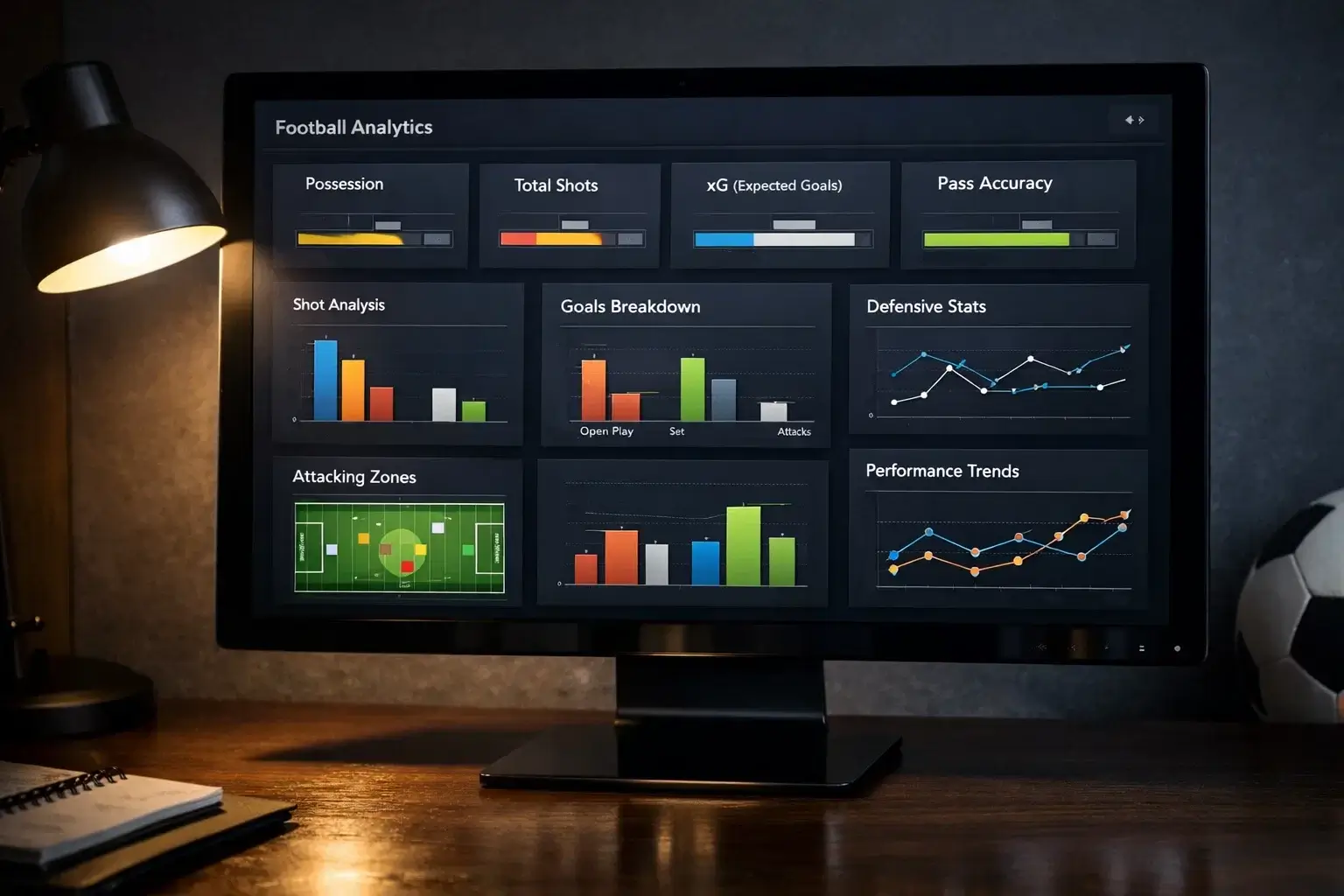
For soccer bettors, expected goals (xG) has revolutionized analysis. The xG metric assigns a probability to each shot based on historical conversion rates for similar attempts. A shot from twelve yards with a clear angle might be worth 0.25 xG, while a header from an acute angle might be worth 0.05 xG. Summing these values produces team xG totals that often diverge from actual goals scored. Teams that consistently outperform their xG may be riding unsustainable finishing luck; teams underperforming their xG may be due for regression. Betting on xG-based regression has produced documented edges in soccer markets.
NFL analytics have advanced dramatically in recent years, providing tools that were unavailable to previous generations of bettors. EPA (Expected Points Added) measures the value of each play relative to historical baselines, capturing efficiency in ways that traditional statistics miss. DVOA (Defense-adjusted Value Over Average) compares team and player performance to league averages on a play-by-play basis. Success rate measures the percentage of plays that produce positive EPA. These metrics correlate with future performance far better than traditional statistics like total yards or time of possession.
Implementing data-driven approaches requires honest assessment of your capabilities. Building a model that beats the market is genuinely difficult—sportsbooks have data scientists doing this full-time. However, incorporating advanced metrics into your handicapping without building a full model still improves decision-making. Following analysts who publish EPA and DVOA rankings, understanding what drives those metrics, and using them as inputs alongside traditional analysis represents a practical middle ground for bettors who lack the skills or time to develop proprietary models.
Psychology of Betting
Emotional control separates sustainable bettors from those who blow up their bankrolls. The mathematics of betting guarantee losing streaks regardless of skill level. A 55% bettor will experience ten consecutive losses roughly once in every 1,500 bets—rare, but it will happen. When it does, your response determines whether you survive to bet another day. Emotional reactions to losses—increasing bet sizes, chasing with desperate parlays, abandoning your strategy—accelerate bankroll destruction far beyond the impact of the losses themselves.

Avoiding tilt requires recognizing your personal triggers and having predetermined responses. Tilt manifests differently for different people: some bet more aggressively after losses, some abandon their criteria to chase action, some stop betting entirely during winning streaks (locking in profits rather than continuing their edge). Identify your patterns through honest self-reflection and bet tracking analysis. Then establish rules that prevent tilt behavior: daily loss limits that trigger mandatory breaks, bet size caps that prevent rage-betting, or cooling-off periods after bad beats.
The long-term mindset necessary for betting success contradicts human psychology at every turn. We are wired to seek immediate feedback, to interpret results as indicators of skill, and to extrapolate recent trends into the future. Betting rewards the opposite: patience through variance, process orientation over results orientation, and recognition that small samples tell us almost nothing. A ten-bet sample could see a 55% bettor go 2-8 or 8-2 with roughly equal probability—neither result says much about underlying skill. Internalizing this reality takes deliberate effort but is essential for long-term success.
Putting It All Together
No single strategy outlined here will make you a winning bettor in isolation. Profitability emerges from the combination: disciplined bankroll management that keeps you solvent through variance, value identification that focuses your action on positive expected value spots, line shopping that captures better numbers than lazy bettors receive, and psychological stability that prevents emotional decisions from undermining your edge. Each component supports the others; removing any one compromises the whole system.
The honest assessment is that most readers will not become profitable bettors even with this knowledge. The market is efficient, the house edge is real, and sustained discipline is psychologically demanding. Treat betting as entertainment with an associated cost rather than as an income source, and any profits become a pleasant surprise rather than an expectation. If you do pursue betting seriously, track your results obsessively, adjust your approach based on data rather than feelings, and accept that years of effort may be required before you can confidently assess whether you have genuine edge.
What distinguishes successful bettors is not secret knowledge but relentless execution of boring fundamentals. They never bet more than their unit size. They always check multiple books. They track every wager and analyze their results. They stick to their process during losing streaks. They do not chase losses or get overconfident during hot runs. These behaviors are simple to describe and difficult to maintain. The strategies work—but only for those who actually implement them.
Join thousands of successful punters who rely on our expert football betting site for their weekly research.
