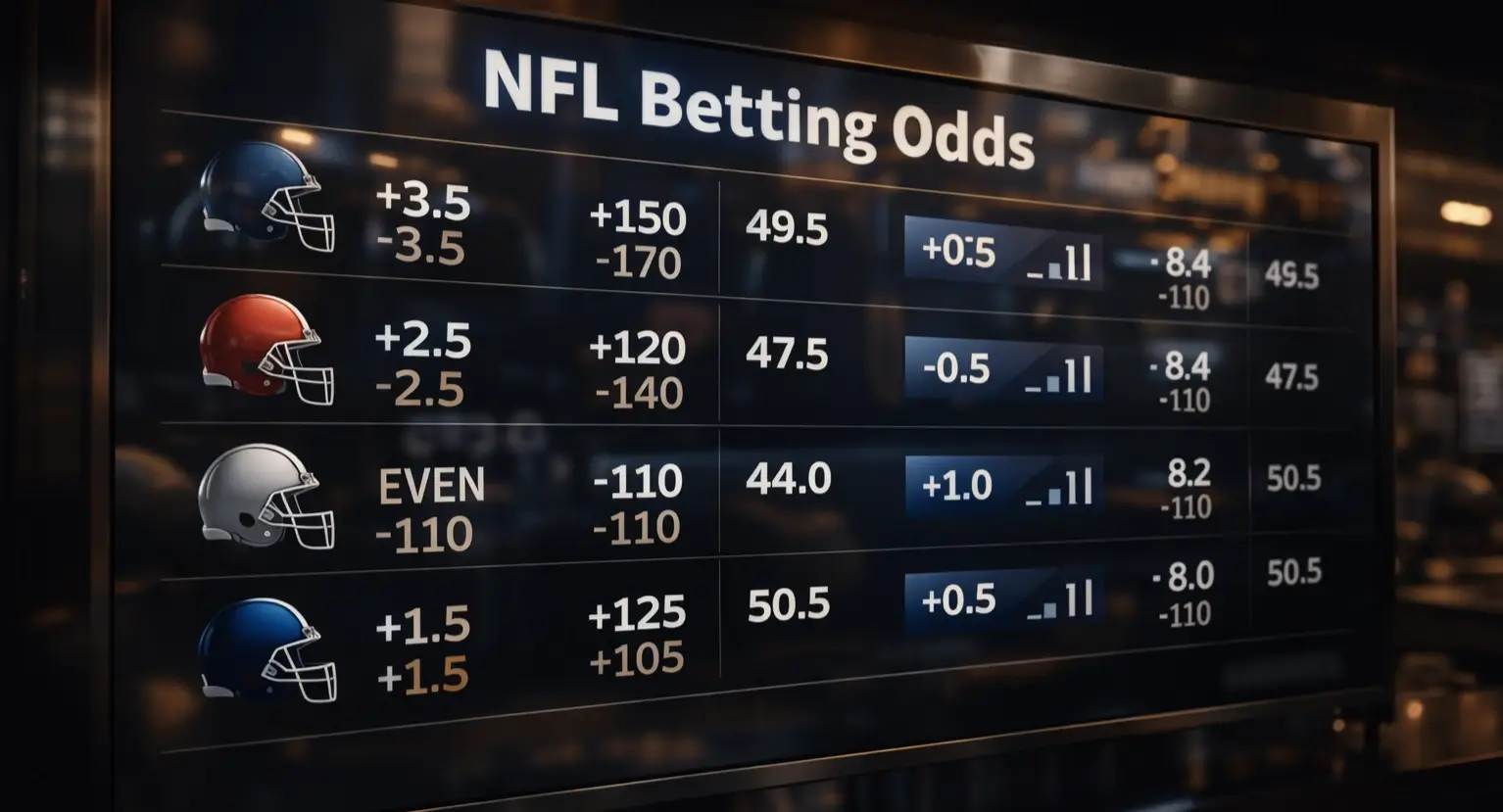
Betting odds look like gibberish until you understand what they represent. Those numbers next to team names—whether displayed as -150, 2.50, or 6/4—encode two pieces of critical information: how much you can win on a successful bet and what probability the sportsbook assigns to that outcome. Mastering odds reading is not optional for serious bettors. Every decision you make depends on understanding whether the price you are being offered represents value or a trap.
This guide walks through the three major odds formats used worldwide, explains how to convert between them, and reveals what those numbers actually tell you about implied probability. More importantly, we will examine how sportsbooks set their lines, why those lines move, and how to identify situations where the posted odds diverge from true probability. That divergence—when it exists—is where profit opportunity lives.
Football betting, whether NFL or soccer, operates on the same fundamental odds principles. The specific numbers differ based on market conventions, but the underlying mathematics remain constant. Once you internalize these concepts, you can evaluate any betting line in any format and determine whether the price being offered justifies the risk. That ability transforms you from a casual bettor hoping for lucky outcomes into someone making informed decisions based on actual analysis.
Once you know how to read the lines, the next step is calculating implied probability to spot true value in the market.
The Fundamentals of Betting Odds
Betting odds serve two interconnected functions: they determine your potential payout and they express the probability the sportsbook assigns to each outcome. When you see odds posted on a game, you are looking at the sportsbook’s assessment of likelihood translated into a price. Understanding this dual nature is essential because it reveals both what you stand to win and what the market believes about the contest you are betting on.
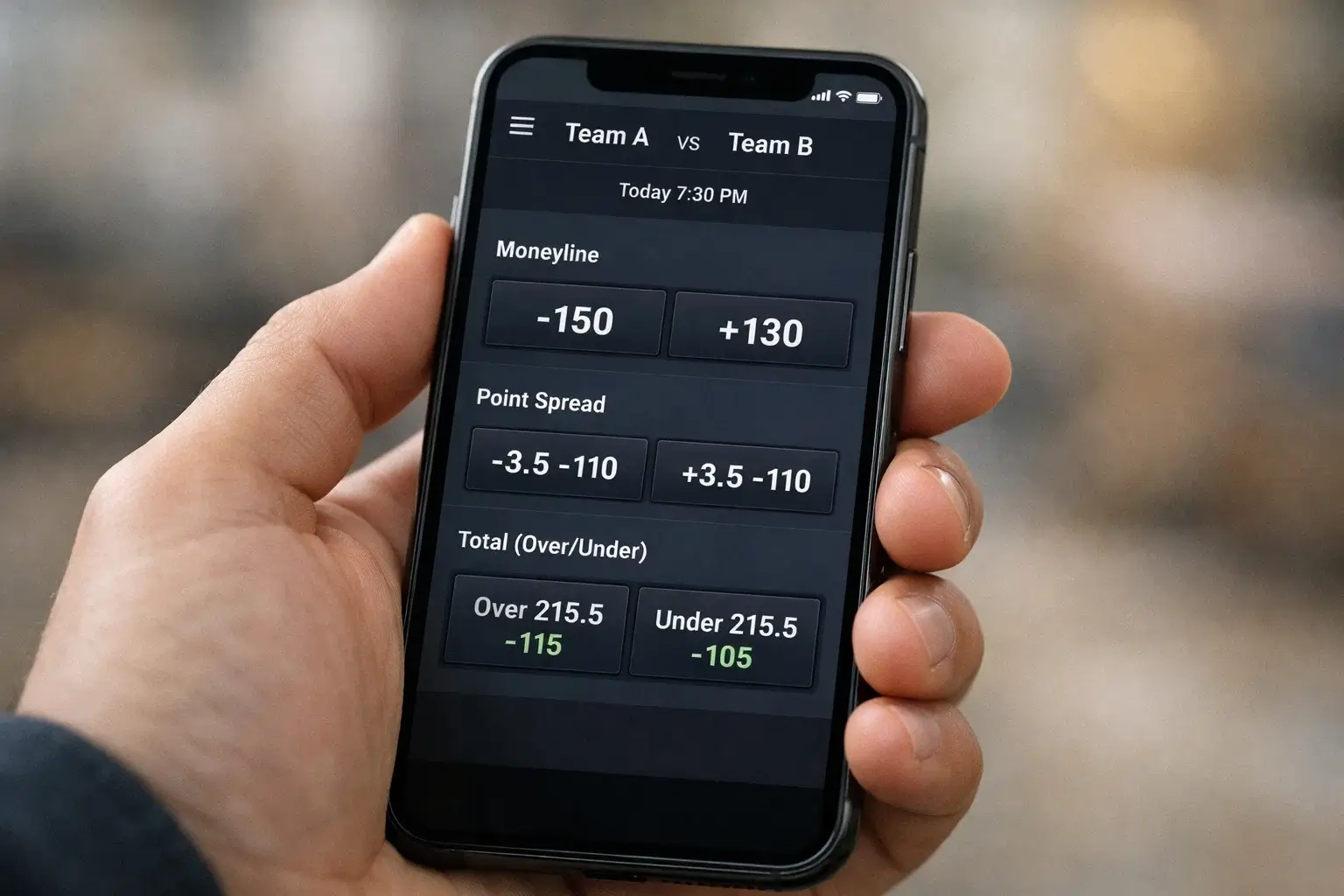
The relationship between odds and probability is mathematical, not mysterious. Higher odds (longer prices) indicate outcomes the sportsbook views as less likely. Lower odds (shorter prices) indicate expected outcomes. A heavy favorite priced at -300 implies roughly 75% win probability. A significant underdog at +500 implies roughly 17% probability. These are not arbitrary designations—they reflect the combined wisdom of oddsmakers’ analysis and the betting market’s collective action.
Bookmakers occupy the central role in this ecosystem. Their job is to set lines that attract relatively balanced action on both sides while building in a margin that guarantees profit regardless of outcome. This margin—called vigorish, juice, or vig—explains why odds always slightly overstate total probabilities. When you convert both sides of a bet to implied probabilities, they will sum to more than 100%. That excess represents the sportsbook’s edge, the price you pay for the privilege of wagering.
Understanding odds transforms how you approach betting decisions. Rather than thinking “I like the Chiefs this week,” you learn to think “Do I believe the Chiefs have a better chance of covering than the -110 odds imply?” This reframing is subtle but profound. The question is never simply whether a team will win or cover. The question is whether the price is right—whether the odds on offer provide value given your assessment of actual probability.
American Odds Explained
American odds dominate the United States betting market and appear as positive or negative numbers centered around 100. The system initially confuses many bettors because it uses different calculations for favorites and underdogs, but the logic becomes clear once you understand what each format represents. Negative numbers indicate favorites; positive numbers indicate underdogs. The magnitude tells you about payout relationships.
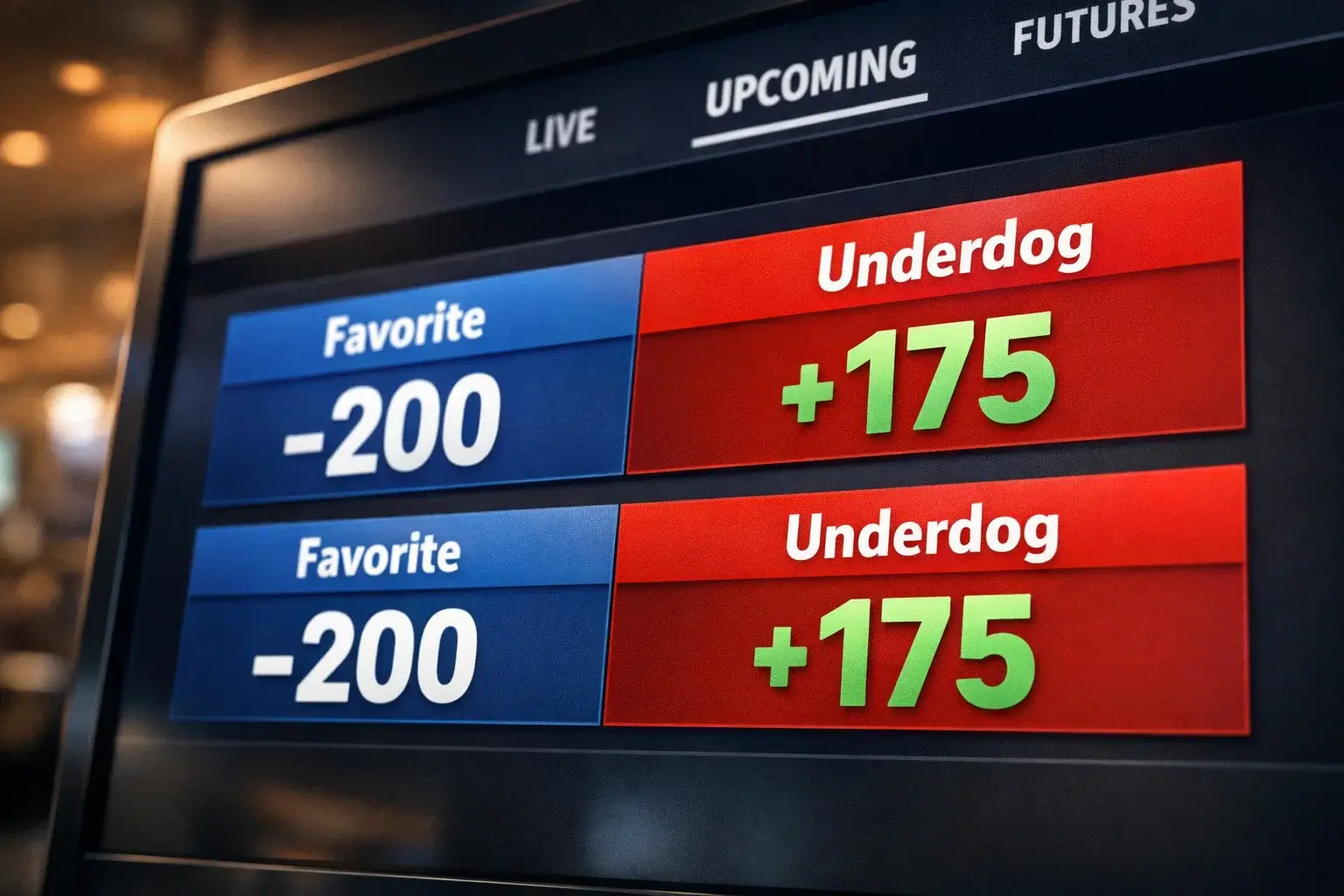
Negative odds tell you how much you must risk to win $100. When you see a team listed at -150, you are being asked to wager $150 for the chance to profit $100 (receiving $250 total if you win—your $150 stake plus $100 profit). The larger the negative number, the bigger favorite the team is and the more you must risk for that $100 profit. A -300 favorite requires risking $300 to win $100. A -110 line—the standard price on spread bets—means risking $110 to win $100.
Positive odds tell you how much you profit on a $100 wager. A team at +200 returns $200 profit on a $100 bet (receiving $300 total—your $100 stake plus $200 profit). The larger the positive number, the bigger underdog and the larger potential return. A +500 underdog returns $500 profit on a $100 bet. A +150 underdog returns $150 profit. Positive odds always indicate that your potential profit exceeds your stake—you are being compensated for taking on the risk of betting an outcome the market views as unlikely.
Calculating exact payouts requires simple formulas. For negative odds: divide 100 by the absolute value of the odds, then multiply by your stake. At -150, that is (100/150) times your bet—so a $30 wager returns $20 profit. For positive odds: divide the odds by 100, then multiply by your stake. At +200, that is (200/100) times your bet—so a $30 wager returns $60 profit. These calculations become automatic with practice, but most sportsbook apps display potential payouts directly on your bet slip.
Working through examples solidifies understanding. Suppose you bet $50 on a team at -200. Your potential profit is $50 times (100/200) = $25, for a total return of $75. Now suppose you bet $50 on a +175 underdog. Your potential profit is $50 times (175/100) = $87.50, for a total return of $137.50. The underdog offers higher potential profit because the market views that outcome as less likely. Your job as a bettor is to assess whether that probability assessment is accurate.
Decimal Odds Explained
Decimal odds, standard throughout Europe, Australia, and Canada, express the total return per unit staked rather than profit alone. The format is mathematically simpler than American odds because one formula works for all prices: multiply your stake by the decimal odds to calculate total return. A $10 bet at 2.50 odds returns $25 total ($10 stake times 2.50). Subtract your stake to find profit: $15.
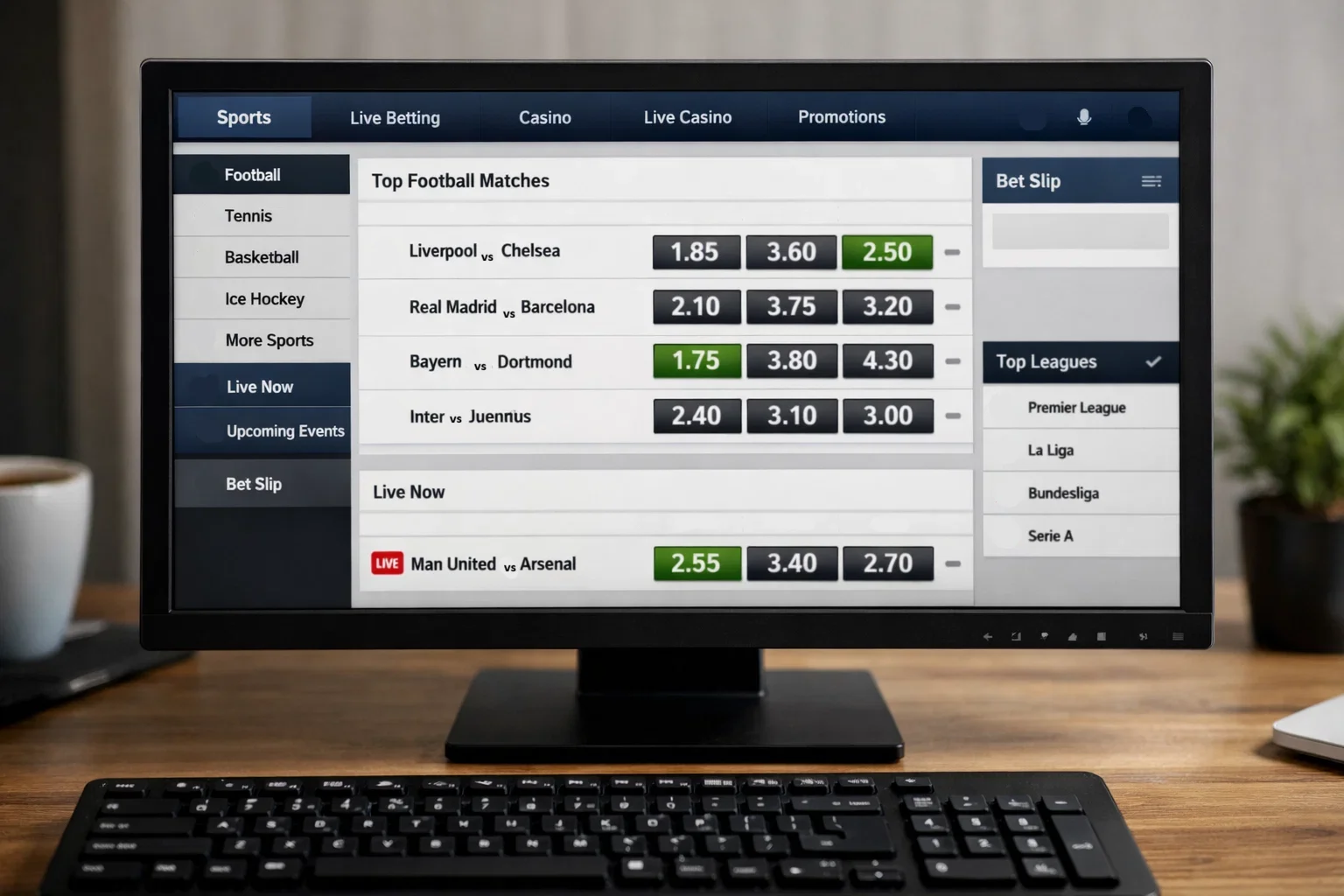
The decimal number directly represents the multiplier applied to your wager. Odds of 1.50 mean you receive 1.5 times your stake back if you win—betting $100 returns $150. Odds of 3.00 mean you receive three times your stake—betting $100 returns $300. Lower decimal odds indicate favorites (numbers approaching 1.00, though odds below 1.00 are essentially nonexistent). Higher decimal odds indicate underdogs. The breakeven point is 2.00, where you exactly double your money on a win.
Converting American odds to decimal requires different approaches for positive and negative numbers. For positive American odds: divide by 100 and add 1. So +200 becomes (200/100) + 1 = 3.00. For negative American odds: divide 100 by the absolute value and add 1. So -150 becomes (100/150) + 1 = 1.67. These conversions let you compare lines across sportsbooks using different formats and ensure you are getting equivalent prices.
The simplicity of decimal odds makes probability calculations more intuitive. Implied probability is simply 1 divided by the decimal odds. At 2.50 odds, implied probability is 1/2.50 = 0.40 or 40%. At 1.50 odds, implied probability is 1/1.50 = 0.67 or 67%. This direct relationship between odds and probability is why many professional bettors prefer working in decimal format even when betting at American sportsbooks—the math is just cleaner.
Fractional Odds Explained
Fractional odds remain standard in the United Kingdom and Ireland, particularly for horse racing and soccer betting. The format expresses potential profit relative to stake as a ratio. Odds of 5/1 (spoken as “five to one”) mean you profit five units for every one unit staked. Odds of 1/4 (spoken as “one to four” or “four to one on”) mean you profit one unit for every four units staked.
Reading fractional odds correctly requires understanding which number represents profit and which represents stake. The first number (numerator) shows profit; the second number (denominator) shows required stake. At 3/1 odds, you profit three units per one unit bet—a $10 bet returns $30 profit plus your $10 stake. At 1/2 odds, you profit one unit per two units bet—a $10 bet returns $5 profit plus your $10 stake. The fraction literally tells you the profit-to-stake ratio.
Fractional odds greater than 1/1 (evens) indicate underdogs where potential profit exceeds stake. Fractional odds less than 1/1 indicate favorites where you must stake more than your potential profit. Evens (1/1) represents a 50% implied probability where profit equals stake. Traditional fractions like 9/4, 11/8, and 6/4 appear frequently and become familiar with exposure, though decimal format is gradually displacing fractions even in traditional UK markets.
Converting fractional odds to other formats involves straightforward arithmetic. To convert to decimal: divide the numerator by the denominator and add 1. So 5/2 becomes (5/2) + 1 = 3.50 decimal. To convert to American: for fractions greater than 1/1, multiply the fraction by 100 (so 5/2 becomes +250). For fractions less than 1/1, divide -100 by the fraction (so 1/2 becomes -100/(0.5) = -200). Online calculators handle these conversions instantly, but understanding the relationships helps you think fluidly across formats.
Odds Conversion Guide
Conversion between odds formats matters because different sportsbooks and markets use different conventions. You might find a better line at a UK-facing book that displays fractional odds while your primary account shows American format. Comparing these prices accurately requires conversion to a common format. Most experienced bettors develop a preference—usually decimal for its mathematical simplicity—and convert everything to that standard.
The core conversion formulas bear repeating for reference. American to decimal: positive American divided by 100 plus 1; negative American becomes 100 divided by absolute value plus 1. Decimal to American: for decimals 2.00 or higher, subtract 1 and multiply by 100 for positive odds; for decimals below 2.00, divide -100 by (decimal minus 1) for negative odds. Fractional to decimal: divide numerator by denominator and add 1. Decimal to fractional: subtract 1 and express as a fraction (3.50 becomes 5/2).
Quick conversion benchmarks help with mental math. Decimal 2.00 equals American +100 equals fractional 1/1 (evens)—all representing implied 50% probability. Decimal 1.50 equals American -200 equals fractional 1/2—implied 67% probability. Decimal 3.00 equals American +200 equals fractional 2/1—implied 33% probability. Memorizing these common equivalencies lets you quickly assess unfamiliar formats without pulling out a calculator.
Conversion tools and calculators automate this process for complex numbers. Every serious bettor bookmarks an odds converter or uses a betting app that handles conversions automatically. The mental math approach works for common prices, but precise comparisons of lines like -118 versus 1.84 decimal require exact calculation. The goal is not to become a human calculator but to understand what conversions represent so you can interpret any odds format you encounter.
Understanding Implied Probability
Implied probability reveals what the odds actually claim about an outcome’s likelihood. Converting odds to probability percentages allows direct comparison between your assessment and the market’s assessment. If you believe a team has a 60% chance to win but the odds imply only 50% probability, you have identified potential value. This comparison is the foundation of informed betting.
The conversion formula for American odds to implied probability differs by sign. For negative odds: absolute value divided by (absolute value plus 100). So -150 implies 150/(150+100) = 60%. For positive odds: 100 divided by (odds plus 100). So +200 implies 100/(200+100) = 33.3%. For decimal odds, the conversion is simpler: 1 divided by the decimal odds. Decimal 2.50 implies 1/2.50 = 40%. These percentages represent what you must believe about probability for the bet to break even.
The overround or vig explains why implied probabilities sum to more than 100%. Consider a game with the favorite at -150 (60% implied) and the underdog at +130 (43.5% implied). These sum to 103.5%, not 100%. That extra 3.5% represents the sportsbook’s margin—the mathematical edge built into their pricing. On a standard -110/-110 spread bet, both sides imply about 52.4% probability, summing to 104.8%. This overround guarantees the book profits with balanced action.
Finding true probability requires removing the vig from implied probability. One simple method: divide each side’s implied probability by the sum of both sides’ implied probabilities. In the -150/+130 example: true probability for the favorite is 60%/103.5% = 58%, and for the underdog is 43.5%/103.5% = 42%. These adjusted probabilities sum to 100% and represent a vig-free estimate of the market’s true beliefs. Comparing your own probability estimates to these de-vigged numbers identifies where your assessment diverges from the market.
How Sportsbooks Set Football Odds
Opening lines emerge from sophisticated modeling combined with oddsmaker judgment. Large sportsbooks employ teams of analysts who build statistical models incorporating historical data, power ratings, situational factors, and dozens of other variables. These models generate initial probability estimates that oddsmakers then adjust based on expected betting patterns, market considerations, and factors the models might miss. The resulting opening line represents the book’s best estimate of a price that will attract balanced action.
Factors influencing lines extend beyond team quality and matchup analysis. Home field advantage receives standard adjustment—typically 1.5 to 2 points in the NFL today, down from the traditional three-point benchmark—but the specific value varies by team and situation. Travel considerations, time zone changes, and short rest affect lines in predictable ways. Weather forecasts for outdoor games, particularly wind and precipitation, influence totals more than spreads. Injury reports cause immediate line movement when key players are ruled out or questionable.
Market efficiency describes how accurately betting lines reflect true probabilities. NFL lines are generally considered efficient markets, though academic research has produced mixed results—some studies find inefficiencies that savvy bettors can exploit, while others conclude the market quickly incorporates available information. This efficiency emerges from the massive volume of informed betting action and sportsbooks’ sophisticated pricing. However, efficiency does not mean perfection. Edges exist, particularly early in the week before lines have been sharpened by betting action, in less-popular markets, and in situations where public bias systematically distorts prices.
Understanding the line-setting process helps bettors identify where value might exist. Books price based on expected action as much as expected outcomes. If a book knows that 70% of its customers will bet the Cowboys regardless of price, they might shade the line slightly against Dallas to balance their exposure. These shading patterns create opportunities for bettors willing to take the other side. Recognizing when a line reflects true probability versus public-adjusted probability is a skill that develops with market experience.
Why Odds Move
Line movement occurs when betting action or new information causes sportsbooks to adjust their prices. Tracking these movements provides insight into where money is flowing and what the market is learning. Some movements are routine adjustments; others signal significant action from sophisticated bettors. Learning to read line movement helps you understand market dynamics even if you do not act on every move.
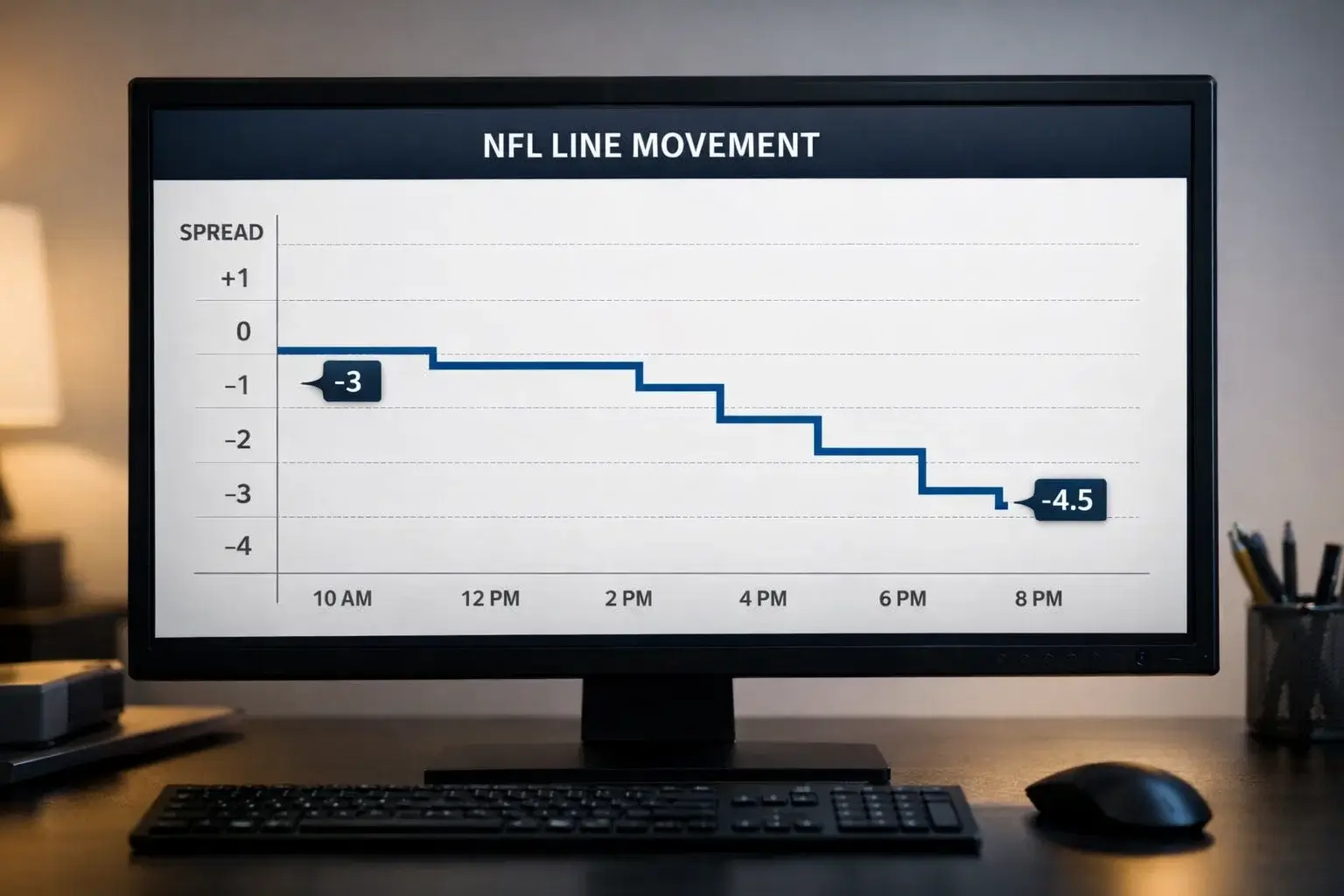
Sharp action from professional bettors moves lines more than recreational volume. Sportsbooks identify sharp accounts through track records and monitor their bets closely. When respected sharp bettors take a position, books often move the line immediately rather than waiting for volume to accumulate. A single $10,000 bet from a known sharp might move a line that $100,000 in recreational action would not budge. This is why lines often move contrary to public betting percentages—sharp money and public money frequently disagree.
Public betting patterns cause predictable movements in popular games. Heavy recreational action on favorites, overs, and nationally televised matchups pushes lines in those directions. When 80% of public bets land on one side but the line moves the other direction, you are witnessing reverse line movement—a strong signal that sharp money disagrees with public sentiment. These situations often offer value on the side receiving sharp support.
News and injury information cause the most dramatic line movements. When Patrick Mahomes is ruled out, Chiefs lines move immediately by three or more points. The key for bettors is assessing whether the move accurately reflects the injury’s impact. Sometimes markets overreact to big names while underreacting to less famous but equally impactful players. Markets also react to weather changes, with totals moving significantly when forecasts shift from calm to windy conditions.
Steam moves represent coordinated sharp action that hits multiple sportsbooks simultaneously. When betting syndicates identify value, they distribute bets across many books at once to capture favorable numbers before lines adjust. The resulting sudden movement across the market—from -3 to -4 in minutes across all major books—signals strong sharp conviction. Recreational bettors rarely have the speed or bankroll to exploit steam moves, but recognizing them provides useful information about market sentiment.
Finding the Best Odds
Line shopping is the easiest edge available to recreational bettors. Different sportsbooks post different lines on the same games, and these differences compound into meaningful profit over time. A bettor who consistently captures -6 instead of -6.5, or +150 instead of +140, builds structural advantage that offsets the sportsbook’s vigorish. Failing to line shop is equivalent to voluntarily accepting worse prices—free money left on the table.
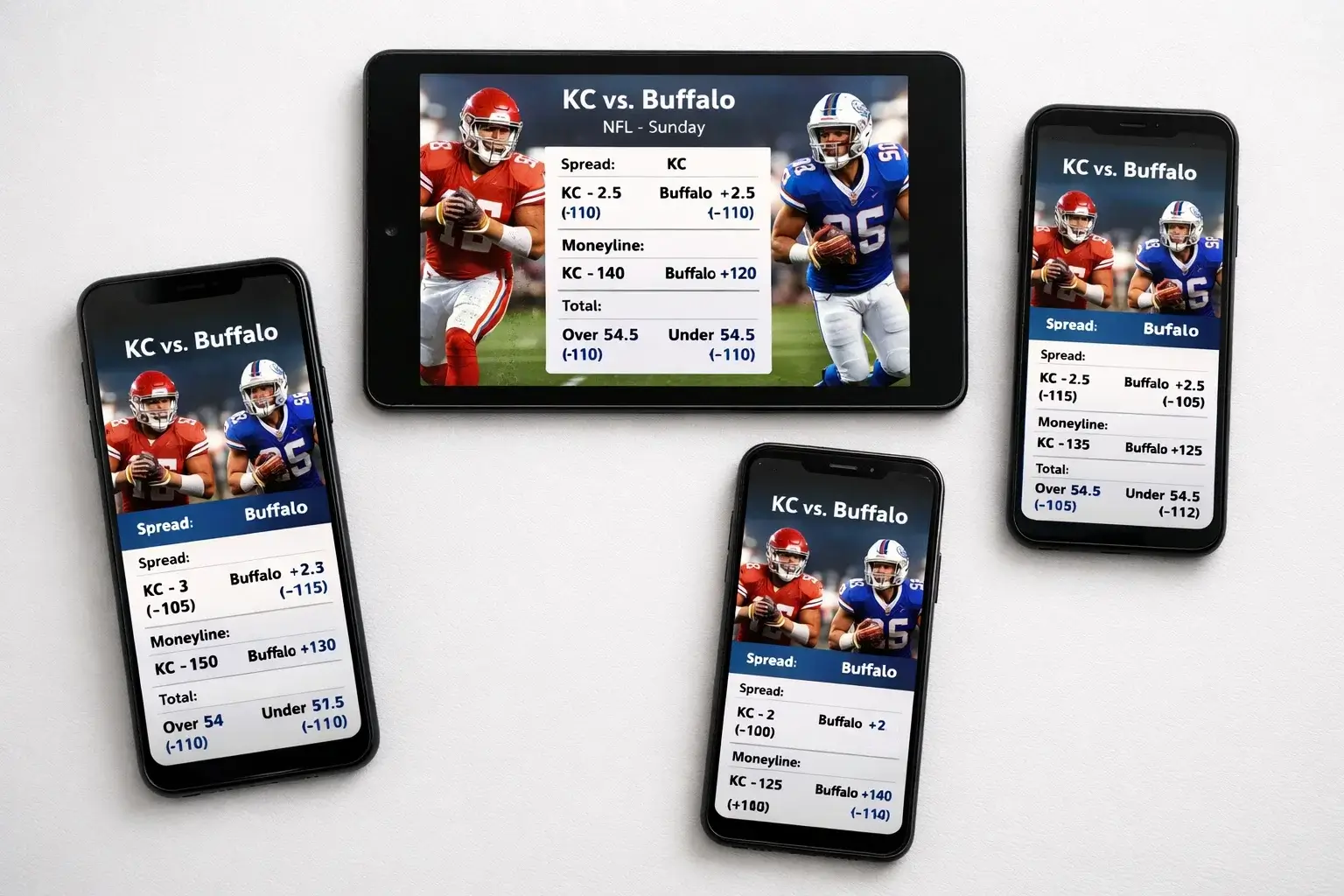
The practical approach to line shopping requires accounts at multiple reputable sportsbooks. Five to ten books provides sufficient coverage for most markets. Before placing any bet, spend thirty seconds comparing prices across your accounts. The differences are often small—half a point on spreads, five to ten cents on juice—but these margins matter. Over a season of betting, capturing consistently better numbers can mean the difference between losing and breaking even, or between breaking even and modest profit.
Timing considerations affect which book offers the best price. Lines open early in the week and sharpen as kickoff approaches. Some books post early numbers that contain value; others wait to copy market consensus. Sharp bettors often grab openers at market-making books, causing those lines to move before softer books adjust. By the time recreational bettors see the lines, the opening value may be gone. Understanding this dynamic—even without access to early lines yourself—explains why numbers you liked on Tuesday look different by Sunday.
Odds comparison tools aggregate prices across multiple sportsbooks in real time. Sites like OddsChecker, The Action Network, and various betting apps display current lines from dozens of books, highlighting the best available price for each side. These tools eliminate the need to manually check each sportsbook, making line shopping effortless. The investment of time to set up accounts and bookmark a comparison tool pays dividends on every bet you place thereafter.
Practical Applications for Football Bettors
Converting knowledge to action requires consistent application of these concepts. Before placing any football bet, run through a mental checklist. What implied probability do the odds represent? Does your assessment of the game justify that probability? Have you checked multiple books for the best price? Is the line value better now or should you wait? These questions become automatic with practice, transforming how you approach each wagering decision.
Different bet types require different odds analysis. Spread bets typically post at -110 on both sides, so the key comparison is the spread itself—is getting +7 at one book better than +6.5 at another? Moneyline bets require direct odds comparison—is -140 materially better than -150? Totals function like spreads, with the number itself being the key variable. Parlays multiply individual odds, so small differences in component legs compound into significant payout variations. Each bet type presents its own optimization challenge.
Building odds literacy takes time but pays permanent dividends. Start by converting every line you see to implied probability, even if you are not betting. This practice ingrains the relationship between odds and probability until it becomes intuitive. Track line movements on games you are interested in, noting when and why they occur. Over weeks and months, patterns emerge—you begin to sense when a line looks off, when movement signals sharp action, when public bias has inflated a price. This market feel, built from sustained attention, is what separates educated bettors from those gambling blind.
The goal is not perfect prediction but informed decision-making. You will still lose bets—plenty of them. But losses at fair prices differ fundamentally from losses at inflated prices. Understanding odds ensures that when you do bet, you are paying the market rate rather than a premium. That baseline competence is the foundation upon which any profitable betting approach must be built.
Start your journey to profitable wagering with the premier NFL betting resource on the web.
