
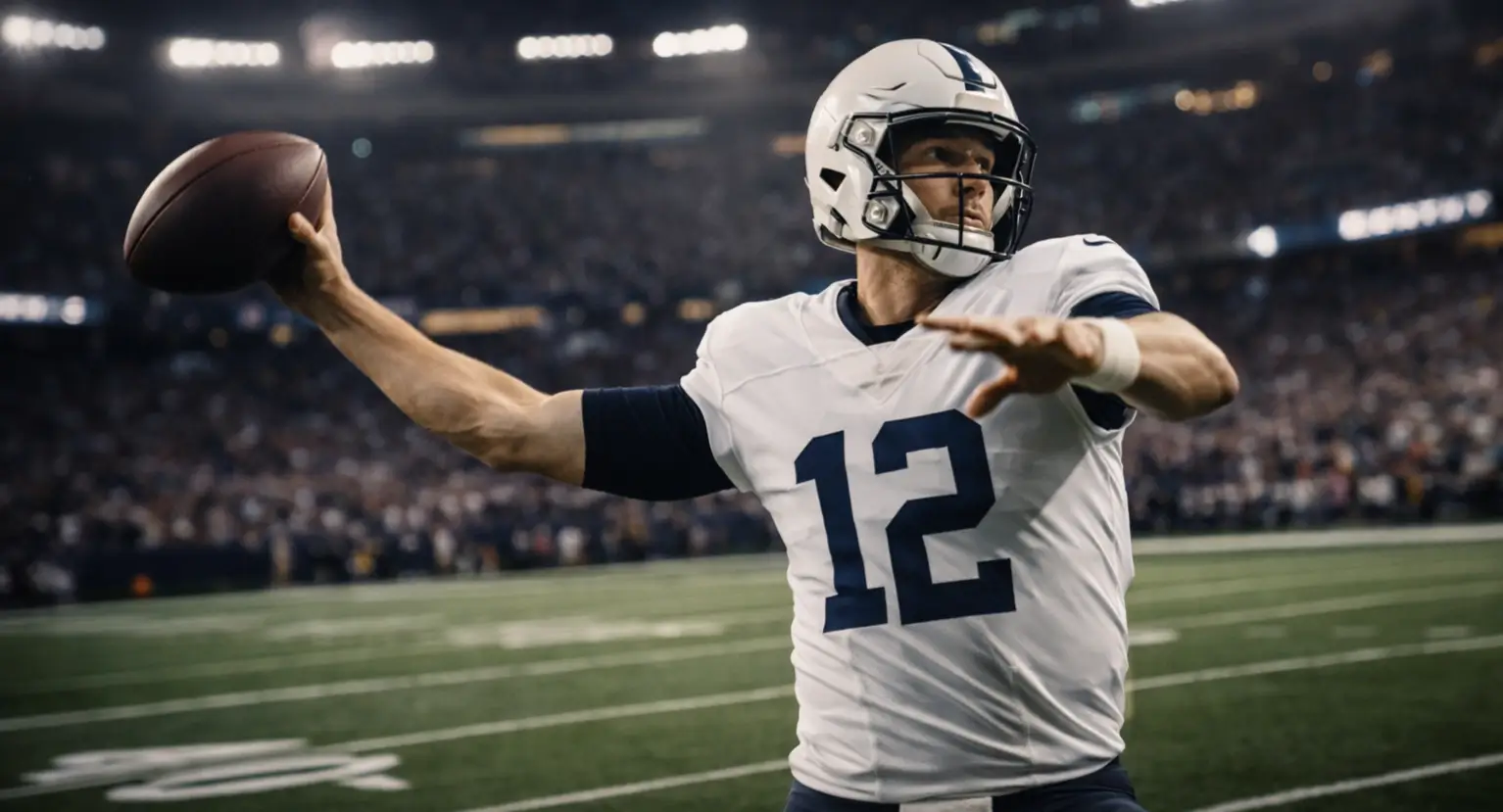
Proposition bets have transformed from novelty wagers into the fastest-growing segment of football betting. Once limited to Super Bowl entertainment—will the coin land heads or tails?—props now dominate daily betting menus with hundreds of options per game. You can bet on Patrick Mahomes’ passing yards, the first scoring play type, whether both teams will score in the first half, or countless other outcomes that have nothing to do with the final score or spread.
This expansion reflects both technological advancement and changing bettor preferences. Modern sportsbooks can price complex player performance markets with reasonable accuracy, and bettors have discovered that props offer opportunities to leverage specific knowledge that traditional markets do not reward. If you understand wide receiver usage patterns or defensive matchup vulnerabilities, prop markets let you monetize that expertise directly rather than hoping it translates into spread outcomes.
This guide covers the full prop betting landscape for football. We will examine player props across all major statistical categories, game props that focus on how contests unfold rather than who wins, team-level propositions, and the unique markets that emerge around major events like the Super Bowl. More importantly, we will discuss strategies for finding value in these markets and the common mistakes that drain prop betting bankrolls. The goal is not to make props seem easy—they are not—but to help you approach them intelligently.
When exploring different wager types, understanding the math behind finding value in player and game props is essential for long-term success.
Understanding Football Proposition Bets
Proposition bets are wagers on specific occurrences within a game that do not directly relate to the final outcome or point spread. Rather than betting on whether the Chiefs beat the Bills, you might bet on Travis Kelce’s receiving yards, whether the game goes to overtime, or which team scores first. Props isolate individual elements of a football game, creating markets for bettors who have opinions on specifics rather than overall results.
The prop betting market has exploded since the 2018 Supreme Court decision that enabled widespread legal sports betting in the United States. Sportsbooks discovered that props generate substantial handle and engagement, particularly among younger bettors who grew up with fantasy football. The same analytical mindset that drives fantasy success—evaluating individual player performance based on matchups and usage—translates directly to prop betting. This demographic shift has pushed sportsbooks to offer ever-expanding prop menus.
Props attract bettors for several reasons beyond the analytical appeal. They offer action throughout the game regardless of score—your Mahomes passing yards bet remains live even in a blowout. They create rooting interests detached from team allegiances—you can bet player props on a game where you have no spread or moneyline position. They also provide perceived edge opportunities, since prop lines may receive less sharp scrutiny than heavily bet traditional markets. Whether this perceived edge is real depends entirely on your analytical capabilities, but the appeal is understandable.
The variety of available props can overwhelm newcomers. A typical NFL Sunday sees thousands of individual prop markets across the slate. Player props cover statistical categories like passing, rushing, and receiving. Game props address how scoring unfolds. Team props focus on collective performance metrics. Novelty props appear around major events. Understanding these categories and identifying where your knowledge might provide edge is the first step toward intelligent prop betting.
Player Prop Bets
Player props bet on individual statistical performance—how many yards a quarterback throws, whether a running back scores a touchdown, how many receptions a receiver records. These markets connect directly to fantasy football thinking, which explains their popularity among bettors who have spent years evaluating players for fantasy purposes. The analytical frameworks overlap substantially, though the betting application requires different considerations.
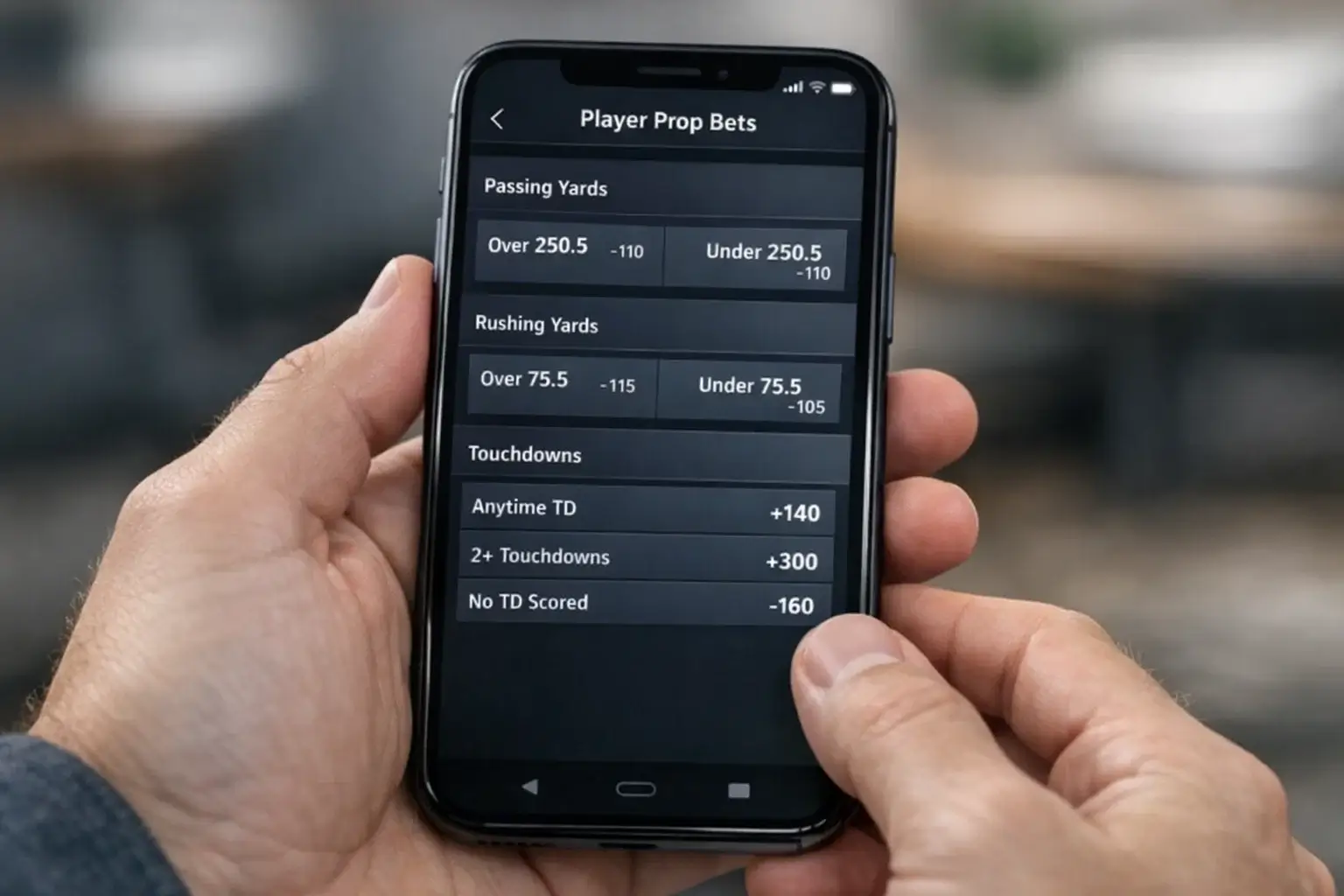
Passing props center on quarterback performance and typically include yards, touchdowns, interceptions, completions, and attempts. Passing yards represent the most liquid market, with lines set based on historical averages, opponent defensive rankings, projected game script, and environmental factors. A quarterback facing a weak secondary in a game with a high total might see his passing yards line set above his season average. Conversely, a dome quarterback traveling to play outdoors in December wind might see a depressed line. Understanding what drives these adjustments helps identify when oddsmakers have over or underreacted.
Touchdown props for quarterbacks present interesting dynamics. Unlike yards, which follow relatively normal distributions, touchdowns are discrete outcomes with high variance. A quarterback might average 2.1 passing touchdowns per game, but on any given Sunday he might throw zero or five. This variance means that over/under touchdown props carry significant luck regardless of analysis quality. Sportsbooks compensate by offering less favorable odds on these markets, and bettors should recognize the inherent volatility before loading up on quarterback touchdown props.
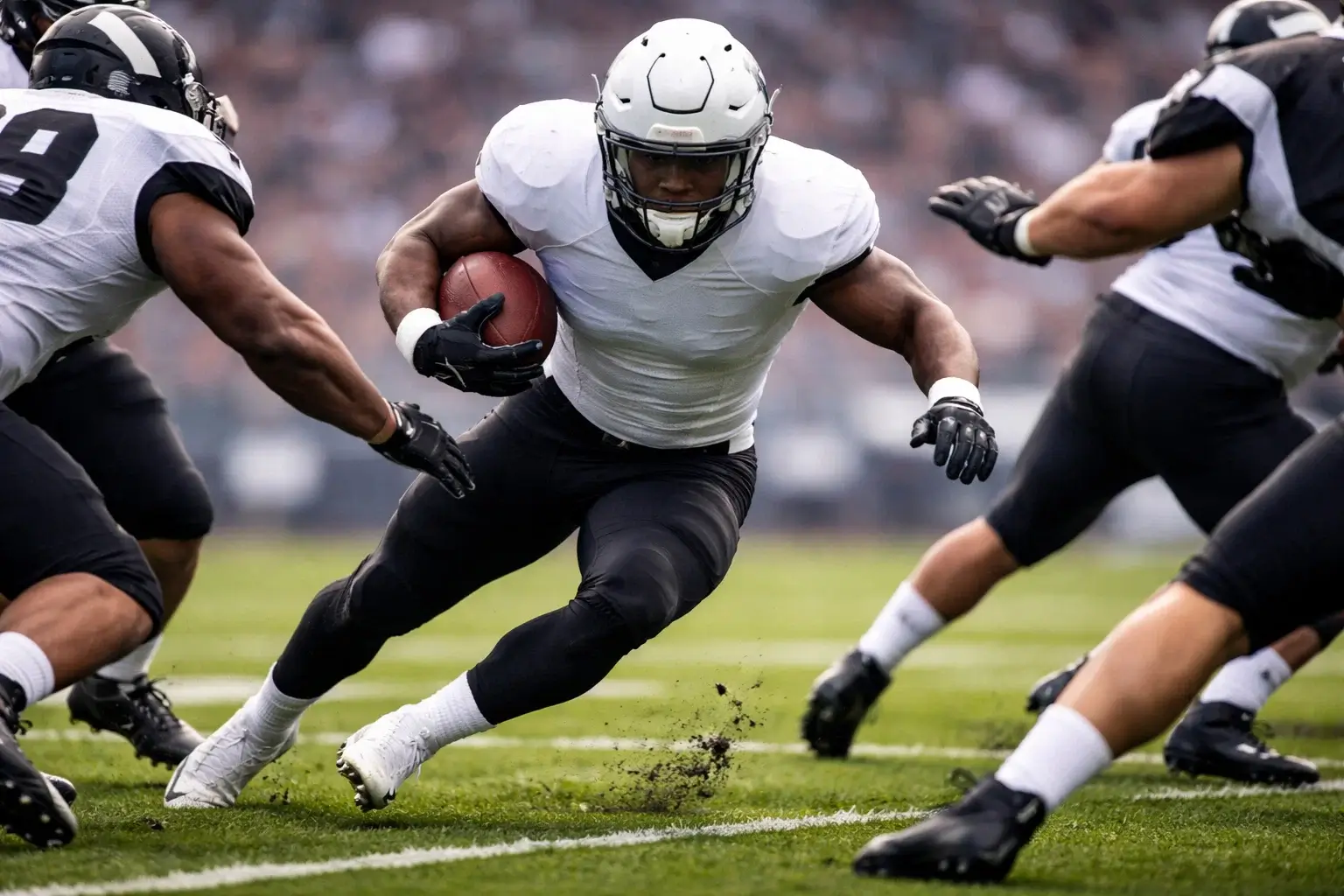
Rushing props cover running backs and mobile quarterbacks, with yards and touchdowns as primary markets. Running back props require careful attention to game script projections. A back on a heavy favorite might see reduced second-half touches as the team protects a lead, capping his yardage upside. A back on an underdog might see limited work if his team falls behind and abandons the run. Snap count projections, committee situations, and goal-line role all affect rushing prop analysis beyond simple talent evaluation.
Receiving props include yards, receptions, and sometimes targets or longest reception. Wide receiver and tight end props demand understanding of target share and air yards distribution. A receiver who commands 25% of his team’s targets has different prop implications than one who sees 15% of targets but on deeper routes. Reception props particularly favor high-volume slot receivers and pass-catching backs who accumulate catches on short routes. Yardage props favor downfield threats who might hit a long gain on any snap.
Defensive and special teams props occupy a smaller market niche but offer opportunities for knowledgeable bettors. Sacks, interceptions, tackles for specific players, and special teams scoring all generate prop markets. These props carry extreme variance—most individual games produce zero interceptions for any given defender—which limits their utility for serious betting. However, situational factors like playing against a turnover-prone quarterback or a poor offensive line can create identifiable edges for bettors willing to research these peripheral markets.
Game Prop Bets
Game props address how a football game unfolds rather than individual player performance. These markets include first scoring play type, overtime probability, margin of victory, and quarter-by-quarter scoring outcomes. Game props appeal to bettors who have opinions about game flow and pace that may not translate into spread or total positions.
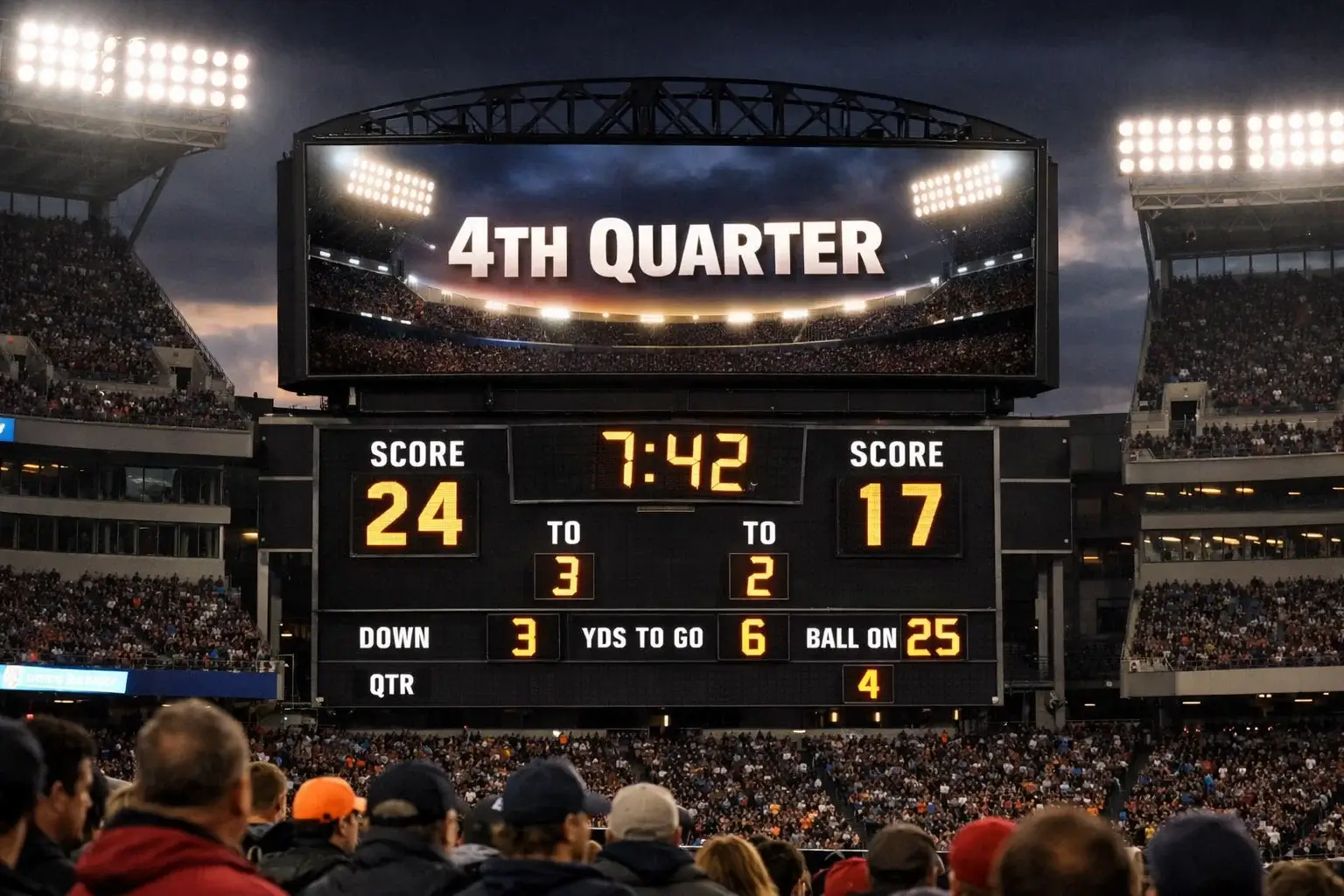
First score type offers several betting options: touchdown, field goal, safety, or specific variants like passing touchdown versus rushing touchdown. These markets reflect expected game script and situational tendencies. Teams with strong red zone offenses might lean toward touchdown as first score. Teams facing tough defenses or with conservative coaching might settle for field goals more often. Weather conditions affecting kicking can shift these probabilities. The markets are relatively illiquid with high vigorish, but clear analytical edges occasionally emerge.
Overtime props ask whether the game will extend beyond regulation. Given that only about 5% of NFL games go to overtime, the no side offers heavy juice while yes pays plus-money. Identifying games with genuinely elevated overtime probability requires projecting close, evenly-matched contests. Games between divisional rivals often run closer than point spreads suggest. Games with excellent defenses and struggling offenses might see compressed scoring that increases overtime likelihood. The math rarely favors betting yes at the offered prices, but contrarian bettors occasionally find value in specific situations.
Margin of victory props group outcomes into ranges—team wins by 1-6 points, 7-12 points, 13-18 points, and so forth. These markets essentially ask you to be more precise than the point spread requires. If you strongly believe the favorite wins by exactly a touchdown, the 7-12 margin prop might offer better odds than simply taking the spread. However, the added precision requirement means you are often giving back value compared to the less precise spread bet. Margin props make most sense when you have specific convictions about game flow that standard markets do not capture.
Scoring props by quarter or half address pace and timing questions. Will there be a score in the first five minutes? Will the first quarter be the highest-scoring? Will both teams score in each half? These props require projecting game tempo, starting strategies, and how coaches approach different game situations. Teams that script their opening drives heavily might produce more first-quarter scoring. Teams known for second-half adjustments might see later scoring concentration. Weather and travel factors that affect early-game performance create further analytical angles.
Team Prop Bets
Team props focus on collective performance metrics for one side rather than the game as a whole. Team totals represent the largest market, but options extend to first team to score, highest-scoring half, and various yes/no propositions about team performance.
Team total over/unders ask how many points a specific team will score. These markets let you bet on one side’s offense without taking a position on the opponent. If you believe the Chiefs’ offense will dominate but cannot decide whether the defense will hold, a Chiefs team total over isolates your offensive conviction. Team totals typically sum to slightly less than the game total due to the vigorish structure, with each team’s line reflecting their projected contribution to overall scoring.
Analyzing team totals requires understanding the same factors that drive game totals—offensive efficiency, defensive quality, pace, and weather—but applied to one side. A team with an explosive offense facing a poor defense might see a high team total even if the opponent’s expected scoring keeps the game total modest. Conversely, a defensively-oriented team might have a low team total despite a high game total if the opponent is expected to dominate possession. These asymmetries create opportunities when the implied team totals seem misaligned with your game projection.
First team to score props offer roughly even-money odds on which team scores initially. Home teams hold a slight historical advantage, and teams that receive the opening kickoff have more opportunities to score first by definition. Coaching tendencies toward aggressive opening scripts matter, as do defensive strengths at forcing early stops. The market is relatively efficient, but live betting opportunities emerge if the first possession stalls without scoring, shifting probabilities for the remaining first-score possibilities.
Half-specific team props ask about performance in each 30-minute segment. First-half team totals, second-half team totals, and comparisons between halves all generate betting markets. Teams that start slowly but finish strong have different half profiles than fast-starting teams that let off the gas. Coaching halftime adjustments, fatigue factors, and game script all influence half-by-half scoring distribution. These granular markets reward bettors who understand team tendencies beyond aggregate statistics.
Anytime Touchdown Scorer Bets
Anytime touchdown scorer props ask whether a specific player will score at least one touchdown during the game. These markets have become extremely popular due to their straightforward structure—either your player finds the end zone or he does not—and the excitement of rooting for a specific outcome on any offensive snap near the goal line.
The ATTS market prices players based on their expected touchdown probability, derived from red zone opportunities, touchdown rate, and usage patterns. A running back who dominates goal-line carries might be priced at -150 (implying roughly 60% touchdown probability), while a depth receiver might be +500 (implying roughly 17% probability). These prices reflect historical conversion rates and projected opportunities. A pass-catching back who rarely carries inside the five has different ATTS probability than a short-yardage specialist who sees most goal-line work.
Finding value in touchdown markets requires identifying discrepancies between market pricing and actual probability. Usage shifts that the market has not yet incorporated create opportunities. If a team’s starting running back is nursing an injury and the backup is expected to see increased goal-line work, the backup’s ATTS price might not fully reflect his elevated opportunity. Similarly, matchup advantages—like a tight end facing a team that struggles to cover the position in the red zone—can push actual probabilities above market implications.
Red zone analysis is essential for ATTS betting. Teams that generate many red zone opportunities produce more touchdown scorers than teams that struggle to advance inside the twenty. Individual players’ share of team red zone targets or carries matters enormously. A receiver who sees 30% of his team’s red zone targets has roughly double the ATTS probability of a receiver with 15% share, all else equal. Target share data and red zone usage statistics from previous games provide the foundation for informed ATTS analysis.
The variance in touchdown props demands conservative bankroll approach. A player with 35% touchdown probability will fail to score in nearly two-thirds of games. Even high-probability scorers—backs priced at -200 implying 67% probability—fail to score one-third of the time. Short-term losing streaks on ATTS bets are inevitable regardless of analysis quality. Size these bets appropriately and accept that touchdown markets are among the highest-variance prop options available.
Super Bowl and Big Game Props
Major events like the Super Bowl generate prop markets that extend far beyond typical game offerings. These range from legitimate football propositions to pure entertainment bets with no analytical foundation. Understanding the spectrum helps you allocate attention appropriately—some Super Bowl props reward football knowledge while others are pure gambling regardless of expertise.
Coin toss and anthem length props epitomize the entertainment category. The coin toss is a literal 50/50 proposition, yet sportsbooks offer both sides at -105 rather than even money, guaranteeing themselves profit. Anthem length props—betting on whether the national anthem exceeds a certain time—have no football relevance whatsoever. These markets exist because bettors want action on Super Bowl day, not because they offer legitimate opportunities. Treat them as entertainment expenses if you participate.
First touchdown scorer in the Super Bowl attracts massive betting handle and significantly worse odds than regular-season ATTS markets. The juice increases because sportsbooks know the market will generate action regardless of pricing. A running back who might be -130 ATTS in a regular game could be -160 for Super Bowl first touchdown scorer. The additional prominence does not change underlying probabilities; it just worsens your price. If you bet first scorer props, recognize you are paying a Super Bowl premium.
Super Bowl MVP betting offers an interesting market that extends beyond game day. Futures on MVP open weeks before the game and shift as narrative expectations develop. Quarterbacks win MVP disproportionately—only a few non-quarterbacks have won in the past two decades—which is usually reflected in pricing. However, blowout scenarios can push MVP to defensive players or non-quarterback offensive stars. Assessing MVP probability requires projecting not just performance but game script and narrative factors that influence voting.
Prop sheets for the Super Bowl can list hundreds of markets, from legitimate player props to absurd novelty bets. The analytical bettor focuses on markets where football knowledge applies—player performance props, team totals, quarter-by-quarter scoring—while avoiding or minimizing action on pure entertainment markets. The total amount bet on legitimate Super Bowl props rivals regular-season NFL weekends, creating liquid markets that reward preparation and punish casual betting.
Prop Betting Strategies
Successful prop betting requires systematic research rather than casual opinions. The bettors who profit from props treat them with the same rigor they would apply to spread or total betting—analyzing matchups, tracking usage patterns, identifying market inefficiencies, and managing bankroll appropriately. The perception that props are easier because they feel more familiar often produces overconfidence and losses.
Research approaches for props begin with statistical baselines. What does this player typically produce? What is his variance game to game? How does his performance change in different matchup types? Historical data provides the foundation, but context matters more for props than for traditional markets. A receiver’s season average means little against a shutdown corner who has held similar receivers well below their baselines. Contextual adjustments separate prop analysis from basic fantasy football thinking.
Matchup analysis identifies favorable and unfavorable situations. A running back facing a bottom-five run defense has different prop implications than the same back facing a top-five unit. Secondary rankings affect receiver props. Pass rush quality affects quarterback props (more pressure means fewer yards, more sacks, more interceptions). These matchup factors are publicly available, which means the market incorporates them to some degree. Your edge comes from assessing matchup impact more accurately than consensus pricing reflects.
Usage rate and snap count data provide crucial context for player props. A receiver who plays 95% of snaps has more opportunity than one who plays 65%. A running back in a committee split sees fewer touches than a bellcow. Target share, carry share, and route participation all affect baseline expectations. Importantly, usage patterns shift throughout seasons—injuries, scheme changes, and emergence of other players all alter distribution. Staying current on usage trends catches opportunities that stale lines miss.
Weather impact on props receives less attention than it deserves. Wind reduces passing efficiency, lowering quarterback and receiver props while potentially increasing rushing props. Rain creates ball security issues that affect everyone. Cold weather slows down offenses that rely on timing and precision passing. Checking weather forecasts before betting any prop in an outdoor game should be automatic. Markets often underreact to weather changes that occur after initial lines are posted, creating opportunities for alert bettors.
Building Props into Parlays
Same-game parlays have made prop combinations one of the most popular betting formats. Combining multiple prop positions from a single game creates enhanced payouts and engagement—your parlay ticket gives you rooting interest across several outcomes simultaneously. The structure also creates opportunities for strategic bettors who understand how prop outcomes correlate.
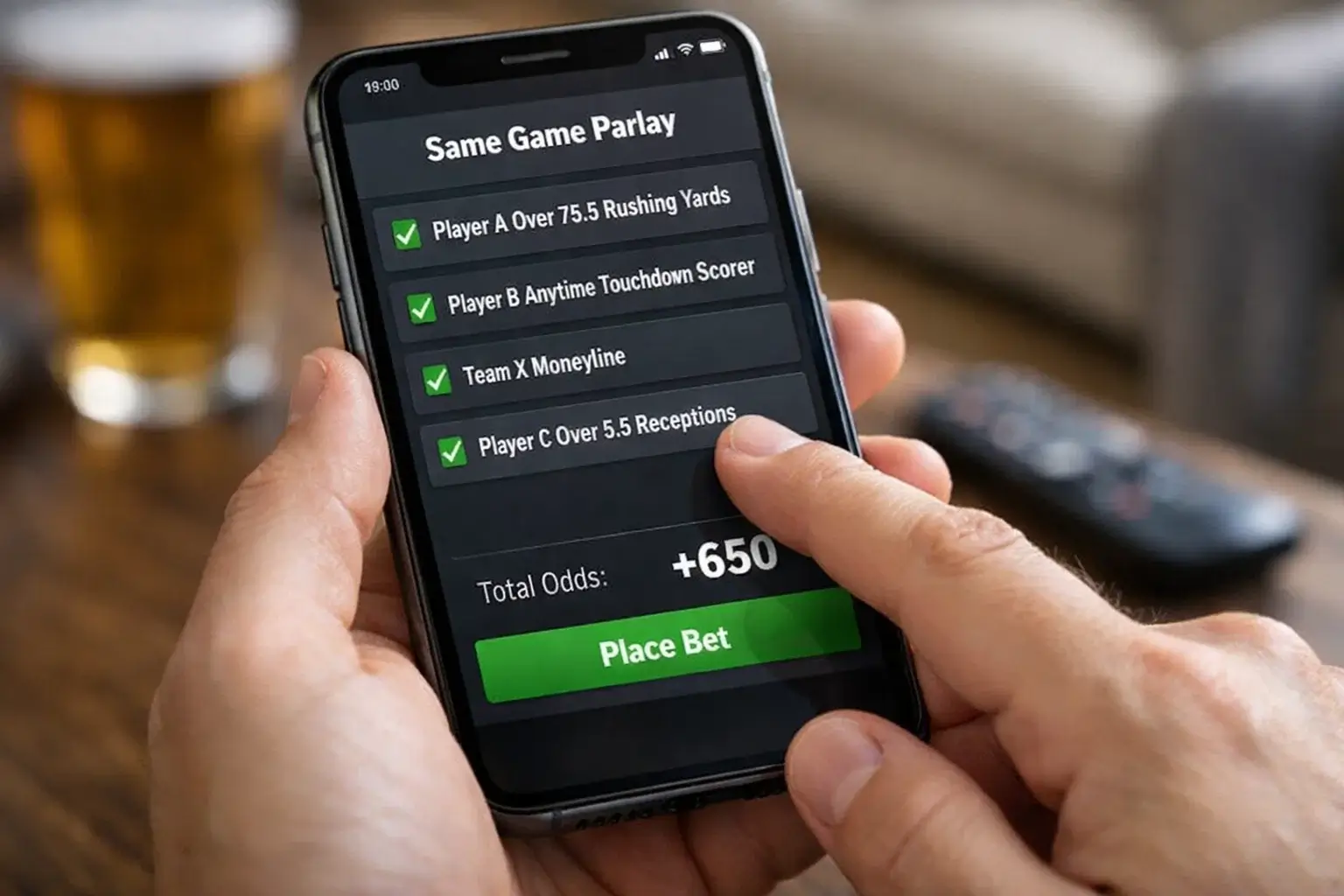
SGP strategy with props centers on correlation—combining outcomes that are more likely to occur together than independently. If you expect a high-scoring game, combining the over with player props on passing yards and receiving yards makes thematic sense. These outcomes are correlated: games that go over the total generally feature more passing yards and receiving yards than games that go under. Building your SGP around a coherent game narrative increases the probability that all legs hit together.
Correlated prop combinations extend beyond obvious cases. A running back exceeding his rushing yards correlates with his team winning and covering (since teams that run effectively usually control games). A quarterback going over his passing attempts correlates with his team trailing (since losing teams pass more to catch up). Understanding these correlations helps you build SGPs that tell consistent stories rather than combining random props that might work against each other.
Negative correlation traps destroy SGP value. Parlaying a quarterback over on passing yards with his running back over on rushing yards creates tension—teams that pass heavily typically run less, and vice versa. Parlaying a team to win with their opponent’s star player going over on stats creates contradiction—if the team wins decisively, the opponent likely has fewer opportunities. Review your SGP legs for internal consistency before betting. If the legs point in different directions, reconsider the combination.
Risk management for prop parlays requires smaller sizing than single-prop bets. Parlays multiply risk, and prop parlays add variance on top of that multiplication. Each leg might have 50-55% probability, but a four-leg parlay at 50% per leg has only about 6% overall probability. The payouts look attractive, but the loss frequency is high. Treat prop parlays as entertainment with occasional wins rather than a consistent profit generator.
Common Prop Betting Mistakes
Overvaluing star players drains prop betting bankrolls consistently. Recreational bettors want to bet on players they know—Patrick Mahomes, Travis Kelce, Derrick Henry—and sportsbooks price these names accordingly. Star player props often carry worse odds than equivalent props on less famous players because the books know demand will be high. Paying a premium to bet recognizable names rather than seeking value across the entire player pool is a losing long-term approach.

Ignoring game script destroys prop analysis that focuses only on player talent. A running back might average 80 rushing yards per game, but if his team falls behind 21-0 in the first half, he is unlikely to see many second-half carries. Props must be evaluated in the context of expected game flow, not just historical averages. Underdogs’ running backs face script risk; heavy favorites’ passing games might see limited late-game opportunities. Projecting game script and adjusting prop expectations accordingly is essential.
Failing to check multiple books for prop prices leaves money on the table. Prop lines vary significantly across sportsbooks—more than spreads or totals because props receive less sharp action and less attention from oddsmakers. One book might have Mahomes passing yards at 285.5 while another has 280.5. That five-yard difference significantly affects expected value. Line shopping matters for all betting, but the inefficiency in prop markets makes it particularly rewarding.
Chasing previous game performance leads to poor prop betting decisions. A receiver who caught 10 passes last week might see elevated prop lines this week despite the previous game being a situational outlier. Recency bias affects both bettors and casual observers, sometimes pushing lines away from fair value. Evaluate each game on its own merits—matchup, game script, usage expectations—rather than extrapolating from recent results that may not be representative.
Betting too many props dilutes edge and increases variance. The temptation to bet multiple player props across every game leads to high volume with minimal analytical advantage. Sportsbooks have edge on every prop; overcoming that edge requires identifying specific mispriced situations. Betting 30 props per week almost certainly includes numerous negative expected value positions that drag down overall results. Selective betting on highest-conviction props produces better outcomes than volume betting across the entire menu.
Applying Prop Betting Knowledge
Prop markets reward specialized knowledge applied with discipline. The bettor who understands receiver-cornerback matchups, running back usage patterns, or red zone tendency can find edges that traditional markets do not offer. But finding edges requires genuine analytical work—not just opinions or favorite player bias. Approach props with the same rigor you would apply to any betting market.
Building a prop betting process means establishing your research routine, identifying the markets where your knowledge provides advantage, and maintaining records that allow performance evaluation. Track your bets by prop type, player position, and betting thesis. Over time, patterns emerge—perhaps you consistently win receiver props but lose on quarterback props, or your ATTS analysis outperforms your yardage predictions. Use this data to focus your prop betting on areas of demonstrated competence.
The prop betting market will continue evolving as sportsbooks refine their pricing and bettors develop more sophisticated analytical approaches. Today’s inefficiencies may disappear tomorrow as markets mature. Staying ahead requires continuous learning—following usage trends, understanding how sportsbooks adjust their models, and recognizing when your previous edge has been competed away. The prop betting landscape of 2026 differs substantially from 2020, and the landscape of 2030 will differ from today.
Treat prop betting as one component of a broader sports betting approach rather than its own isolated activity. The analytical skills that inform prop betting—matchup analysis, usage projection, game script modeling—also improve your spread and total betting. Information flows both directions. Your prop research might reveal that a team’s passing game is stronger than the market recognizes, which has implications for team totals and point spreads. Integrated analysis across market types produces better outcomes than siloed approaches.
For daily updates and advanced analytics, visit our top football betting guide to refine your strategy.
