

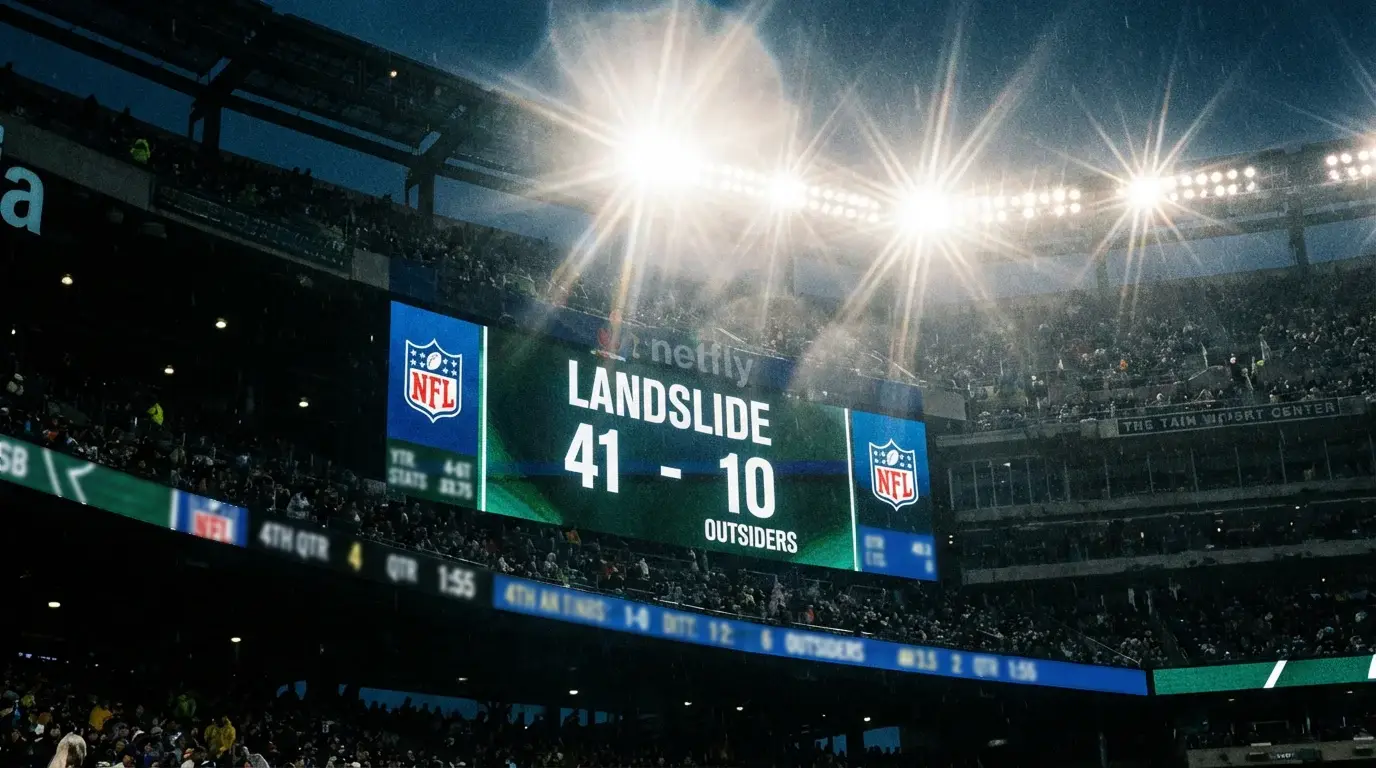
A team wins 41-10 on Monday Night Football and suddenly half the betting public wants to bet them the following week. Another team loses 7-31 and the public won’t touch them with a ten-foot pole. This is recency bias at work — the human tendency to overweight the most recent data point and treat it as though it reveals the team’s true identity. In football betting, recency bias is one of the most reliable profit generators. Not for the people who have it, but for the people who bet against it.
The Psychology of Betting Overreactions
Recency bias isn’t a character flaw. It’s a cognitive shortcut hardwired into human decision-making. Our brains evolved to prioritize recent information because in most survival contexts, the most recent data is the most relevant. If the watering hole had a predator yesterday, it probably still has one today. The problem is that football games aren’t survival situations, and a single game is a terrible sample size for evaluating a team’s true quality.
A football game involves roughly 120 to 150 plays, influenced by weather, officiating, injuries, turnover luck, and the specific game plan deployed by each coaching staff. The variance in any individual game is enormous. A team that turns the ball over four times in one game might not turn it over at all the next week. A defense that gave up three explosive plays of 40-plus yards might be among the best in the league at preventing big plays over the full season. One game captures a single snapshot of a distribution, and that snapshot can be wildly unrepresentative of the underlying talent.
Yet the betting public reacts as if last week’s game revealed fundamental truth. When the Lions beat the Packers 35-10, the public sees a dominant team and a paper tiger. They bet accordingly, pushing the Lions’ line the following week and deflating the Packers’ number. The sharper question — did the Lions play at a sustainable level, and did the Packers play at an unsustainably bad one? — rarely gets asked in the rush to ride the hot hand or fade the cold one.
How Sportsbooks Profit from Your Memory
Sportsbooks understand recency bias better than anyone because it’s one of the most predictable patterns in recreational betting behavior. When a team puts up a dominant performance, the book knows that public money will disproportionately flow toward that team the following week. When a team lays an egg, the book knows the public will avoid them. This predictability is valuable because it allows the book to shade lines in advance.
The mechanism is subtle. If the book’s model says a team should be -4, but the book knows that last week’s blowout win will generate heavy public action on that team, they might open the line at -5 or -5.5. The extra half-point or full point serves as a tax on recency bias — the public pays a premium for the privilege of betting on the team that looked good last week. The money that comes in at -5.5 would have come in at -4 too, but now the book has built an extra cushion of value into the number.
This shading creates a systematic edge for contrarian bettors. Teams coming off blowout losses are often underloved by the public, and their lines reflect an emotional discount rather than a rational assessment of their quality. Conversely, teams coming off blowout wins are often overloved, and their lines are inflated by public enthusiasm. Over large sample sizes, betting against extreme recency bias — fading teams after dominant wins and backing teams after ugly losses — has been a demonstrably profitable strategy in NFL betting.
The sportsbook isn’t being generous to contrarian bettors. It’s simply managing its own risk. By shading the line toward the side it expects public money to favor, the book reduces its exposure and ensures it collects vig regardless of the outcome. The contrarian bettor benefits as a side effect of the book’s risk management, not because the book is trying to help them.
Separating Sustainable Trends from One-Game Noise
The challenge with recency bias isn’t that recent performance is always irrelevant — sometimes it genuinely signals a shift in team quality. A team that fires its defensive coordinator and immediately improves might have undergone a real structural change. A quarterback who returns from injury and throws for 350 yards might represent a genuine upgrade over his backup. The trick is distinguishing real signal from noise, and the primary tool for doing so is sample size.
One game is never enough evidence to conclude that a team has fundamentally changed. Three games in the same direction starts to suggest a pattern. Five or six games with consistent underlying metrics — not just results, but process metrics like yards per play, success rate, and explosive play rate — provides reasonable evidence of a genuine shift. If a team’s improvement is visible not just in the score but in the per-play data, the snap counts, and the game-script-adjusted efficiency numbers, you’re likely looking at a real trend rather than a hot streak propped up by turnover luck.
The red flags for noise are equally identifiable. If a team’s blowout win was fueled by three defensive touchdowns, a punt return for a score, and an opponent’s backup quarterback, the 41-10 final score tells you almost nothing about that team’s offensive quality or future performance. If a team’s blowout loss featured four fumbles, two missed field goals, and a pick-six on a tipped pass, the score dramatically overstates the quality gap between the two teams. Stripping away the high-variance plays and focusing on the stable, repeatable aspects of performance is how you avoid letting last week’s score write your betting ticket.
Practical Techniques for Debiasing Your Analysis
Knowing about recency bias and actually overcoming it are two very different things. The bias is deeply ingrained, and even experienced bettors catch themselves anchoring to last week’s performance when they know better. Building systematic safeguards into your handicapping process is more effective than relying on willpower alone.
The first safeguard is to make your projected spread before you look at the current line or think about last week’s results. Start with season-long metrics — offensive and defensive efficiency, yards per play, turnover-adjusted scoring — and generate a number based on the full body of work. Only after you’ve committed to a number should you consider how last week’s game might justify an adjustment. This sequence matters because it prevents the most recent game from becoming the anchor around which your entire analysis revolves.
The second safeguard is to build a simple regression model that quantifies how predictive recent results actually are. Take a team’s per-game scoring margin and compare it to their season-average scoring margin. Over a full NFL season, the correlation between any single game’s margin and the team’s true quality is low — typically in the range of 0.15 to 0.25. The correlation between a five-game rolling average and true quality is significantly higher. This mathematical reality should inform how much weight you give to any individual performance.
The third safeguard is to watch the game, not just the score. If you’re going to let a recent game influence your opinion, make sure you actually saw it rather than reacting to the box score. The eye test, applied by someone who understands scheme and personnel, catches things that statistics miss. A 24-17 loss might have been a dominant performance marred by two unlucky turnovers. A 31-14 win might have been a tight game until garbage time inflated the margin. The final score is the headline; the film is the story.
The Recency Bias Calendar in Football
Recency bias doesn’t hit the market evenly across the season. It peaks at certain inflection points where the public’s emotional reactions are strongest, and recognizing these windows can help you time your contrarian bets more effectively.
Week 1 of the NFL season is the ultimate recency bias trap. Teams that looked good in the preseason attract disproportionate public attention, while teams that struggled through August get written off. The irony is that preseason performance is nearly worthless for predicting regular-season outcomes — coaches are testing schemes and evaluating roster battles, not trying to win. Yet the public treats the preseason as a preview, and Week 1 lines reflect that misplaced confidence.
The weeks immediately following a team’s bye week are another recency bias hotspot. The public remembers the last game the team played — two weeks ago now — and projects that performance forward as though the bye didn’t happen. Meanwhile, the team has had extra time to rest, heal, and prepare, which may have changed the underlying dynamics significantly. Teams returning from a bye have historically performed slightly better than the market expected, partly because the public’s memory is anchored to a game that is now less relevant.
The final weeks of the regular season produce a different kind of recency bias: narrative fatigue. By December, the public has formed fixed opinions about each team based on the accumulated storyline. A team that started 1-4 but has quietly gone 6-2 since is still perceived as a bad team by casual bettors who stopped paying attention after the slow start. Conversely, a team that started 6-0 but has gone 2-4 recently still carries the aura of a contender. These stale narratives create mispriced lines for bettors willing to update their assessments based on the most recent and relevant data — which, ironically, is exactly what recency bias is supposed to do, just applied to the wrong timeframe.
The Score Is the Worst Part of the Game
There’s a saying in analytics circles that the final score is the least informative part of a football game. It’s an exaggeration, but it captures an important truth: the score compresses 150 plays of highly variable action into a single number that strips away all context. Two points from a safety feel the same in the score column as two points from a strategic offensive decision to take a knee instead of scoring. A 28-27 game and a 28-3 game both produce one winner and one loser, but they tell radically different stories about the teams involved.
Your job as a bettor is to read the story, not just the headline. Let the public react to scores. Let them pile onto last week’s winner and abandon last week’s loser. Let the sportsbook shade the line to accommodate their predictable behavior. And then, once the noise settles and the number reflects everyone else’s emotional memory, decide whether the price is right based on what actually happened on the field — not what the scoreboard said happened.
