

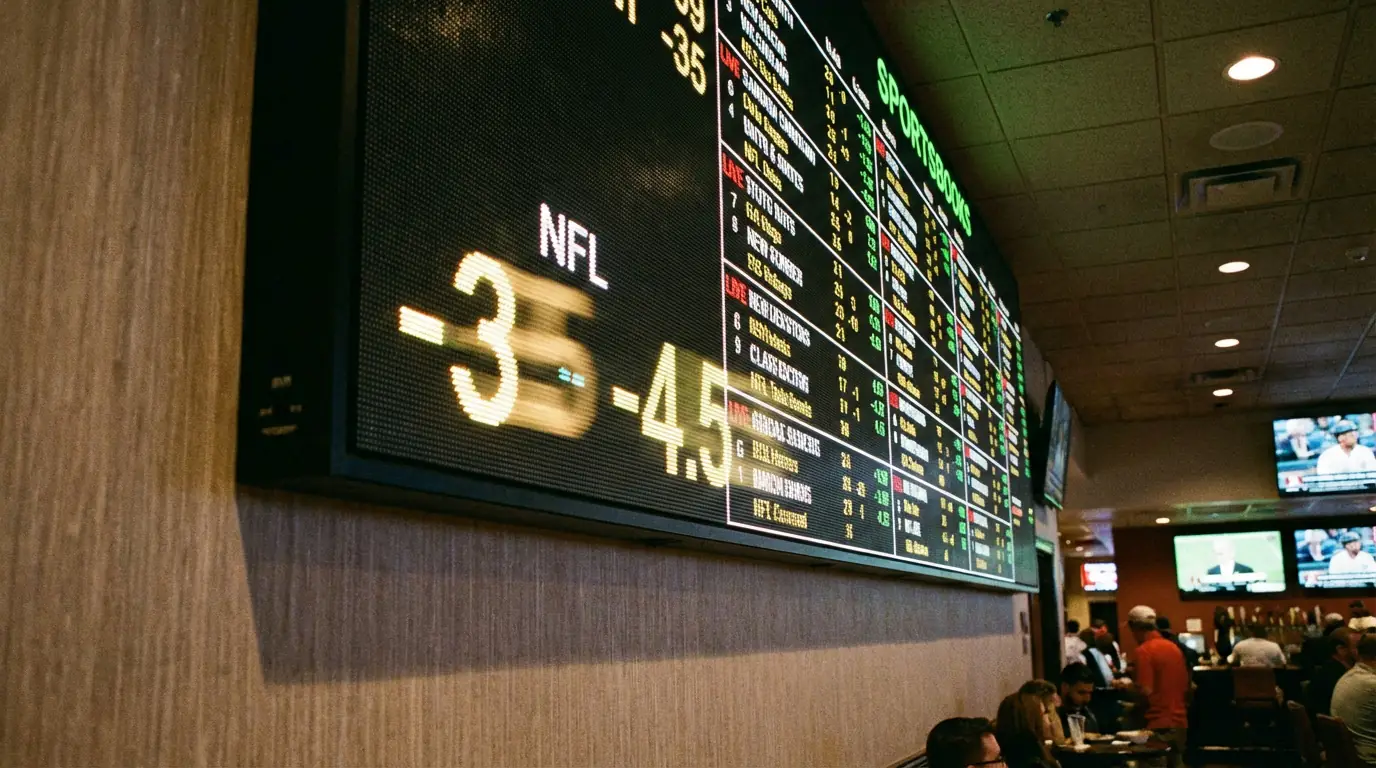
You refresh your sportsbook app and the Chiefs are -3. You grab a coffee, come back two minutes later, and they’re -4.5. Nobody got injured. No breaking news dropped. Yet the number just lurched a point and a half in the time it took to pour a cup. What you just witnessed is a steam move — one of the most powerful and misunderstood phenomena in sports betting. Understanding what causes it, and more importantly what to do when you see one, separates disciplined bettors from those who spend every weekend chasing numbers that have already left the station.
Defining Syndicate Steam Moves
A steam move is a sudden, significant line shift triggered by coordinated sharp action across multiple sportsbooks within a very short window. It’s not one bettor placing one big bet at one book. It’s multiple sharp accounts — sometimes operating independently, sometimes as part of syndicates — simultaneously hitting the same side at several sportsbooks. When DraftKings, FanDuel, BetMGM, and Caesars all move a line in the same direction within minutes, the market has just received a strong collective signal about where value exists.
The mechanics work like a chain reaction. A sharp group identifies an edge on a particular side of a game. They deploy bettors to place wagers at multiple books simultaneously, trying to capture the best available number before the market adjusts. The first book to take a large sharp bet moves its line. Other books, watching the broader market through odds feeds and proprietary monitoring systems, see the movement and adjust their own lines preemptively — even if they haven’t taken a triggering bet yet. Within minutes, a number that was stable for hours has shifted across the entire market.
The speed is what distinguishes steam from ordinary sharp action. Normal sharp betting might move a line gradually over hours as individual professionals bet at different times. Steam compresses that process into minutes. The velocity itself carries information: if multiple sharp entities converge on the same position at the same time, their combined confidence level is high. The market responds accordingly, often overcorrecting in the immediate aftermath before settling at a new equilibrium.
Why Sportsbooks React So Quickly
Sportsbooks in 2026 operate with sophisticated real-time risk management systems that track line movements across the entire market. When their algorithms detect that several competitor books have moved the same line in the same direction within a short time window, the system flags it as a potential steam move. Many books have automated responses that adjust their own lines before a human trader even reviews the situation.
This automated response makes economic sense. If a book is the last to move during a steam event, it becomes the only place in the market offering the stale number. Every sharp bettor and line-shopping recreational bettor will flood that book, creating massive one-sided liability on what is likely the wrong side of the market. Moving quickly — even if it means occasionally overreacting — is cheaper than absorbing concentrated sharp volume at an outdated price.
The result is a market that moves in waves. The initial trigger might be a handful of sharp bets totaling a few hundred thousand dollars, but the cascading effect of automated responses and manual adjustments across dozens of books creates the impression of a massive, market-wide shift. The actual information content of the move might be relatively modest — one group’s model identified a half-point of value — but the market’s reaction amplifies it into a full point or more of movement.
How to Recognize a Steam Move in Real Time
Recognizing steam requires monitoring line movements across multiple sportsbooks simultaneously. Free odds-comparison sites and paid services track real-time lines from dozens of books, and when you see three or more major sportsbooks move the same number in the same direction within a five-to-ten minute window, you’re likely looking at steam. The key indicators are speed, breadth, and magnitude — if the move is fast, widespread, and larger than the typical half-point adjustment, steam is the probable explanation.
Context matters when evaluating whether a line shift is genuine steam or something more mundane. Lines move for plenty of non-steam reasons: a key injury report drops, weather changes significantly, or a single large recreational bettor (a “whale”) places a disproportionate wager. Injury-driven moves tend to happen across the market simultaneously too, but they’re usually accompanied by a public news event. Whale-driven moves typically appear at a single book first, with slower and smaller ripple effects. Steam moves, by contrast, appear across multiple books almost simultaneously with no accompanying public information.
Timing is another diagnostic clue. Steam moves most frequently occur in the hours after a line opens (when sharp bettors first engage with the number) and in the final hour before kickoff (when late information crystallizes and sharps deploy remaining capital). Midweek moves on NFL lines that aren’t attached to any news event are often the cleanest steam signals. If a line that’s been stable since Tuesday suddenly moves a full point on Thursday afternoon with no injury report in sight, sharps are likely responsible.
The Trap of Chasing Steam
Here’s where most recreational bettors go wrong with steam: they see the move, panic, and bet the new number. The problem is that by the time you’ve noticed the steam move, the value that caused it is already gone. The sharp bettors who triggered the move got the Chiefs at -3. You’re now looking at -4.5. They captured 1.5 points of value. You’re buying the aftermath.
Chasing steam is essentially paying a premium for someone else’s information. The sharps already extracted the inefficiency from the market. What remains is a line that has overcorrected in many cases, or at best has reached fair value. Betting into a post-steam line without your own independent edge is no different from betting any other line — except you’re doing it with more emotional urgency and less analytical rigor, which is a recipe for poor decisions.
The occasional exception exists when you had already planned to bet a particular side and the steam move happens to confirm your position. If your model had the Chiefs at -5 and you were waiting for a good entry point, and they steam from -3 to -4.5, there might still be value at -4.5 relative to your projection. But this only works if you had the analysis in place before the move. Retrofitting your analysis to justify chasing a number you weren’t planning to bet is self-deception wearing a statistical costume.
A Smarter Relationship with Market Signals
Instead of chasing steam moves, use them as a long-term calibration tool for your own handicapping. Keep a record of games where steam occurred and note the direction. Over a season, compare the steam side’s performance against the closing line and against final outcomes. This gives you empirical data on how reliable the sharp consensus is in different contexts — primetime NFL games, early-week college football lines, totals versus sides.
Some bettors build what they call a “steam ledger” — a running log of every significant steam move they observe, along with the opening line, the post-steam line, the closing line, and the result. After a full season, patterns emerge. You might find that steam on NFL totals is more predictive than steam on spreads, or that midweek college football steam has a stronger signal than Sunday morning NFL moves. These patterns become inputs for your own decision-making process rather than triggers for impulsive bets.
The sharpest recreational bettors treat steam the way a sailor treats wind direction — it’s essential information about the environment, but you still need your own map and compass. If the wind suddenly shifts, you adjust your understanding of conditions, not your destination. The destination should already be set by your analysis. The steam move just tells you whether the market is sailing in the same direction or not.
The Speed Premium You Can’t Afford
There’s an arms race built into steam moves that recreational bettors will never win. The groups triggering steam have automated systems, direct lines to sportsbook trading desks, networks of runners placing simultaneous bets across dozens of accounts, and latency advantages measured in seconds. Trying to beat them to the number is like trying to outrun a trading algorithm on Wall Street — you’ll lose every time, and the losses will feel random because you won’t understand why you keep arriving a few seconds too late. Accept that steam is someone else’s edge. Then go find your own.
